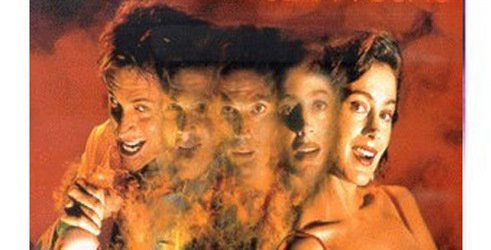
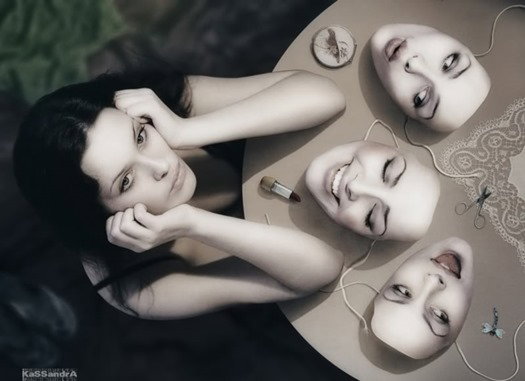
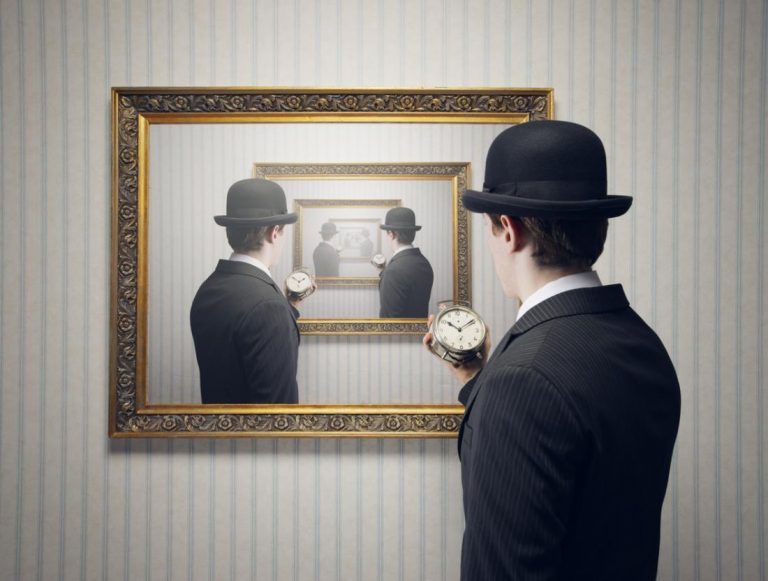
The Secret of the Split Personality Little Me, Little He.
The main character is a doctor, with highly valued morals and intelligence. Loved by everyone around him and well known for his soft heart, Dr. Jekyll discovers a poison that allows him to radically change his personality. After trying it on himself, Dr. Jekyll's body is possessed by an evil genius, Mr. Hyde. He is a monster and does not shy away from anything.
Robert Louis Stevenson, as a great effect, used the appearance of a split personality in a great work of science fiction, "Doctor Jekyll and Mr. Hyde", 1886.
One of the most severe disorders that can be encountered in psychological practice is dissociative personality disorder, also known as multiple personality disorder. Namely, it is about the existence of different personalities (or identities) in one person, each of which, when present, can dominate attitudes, behavior and emotions as if other personalities do not exist.
The main characteristic of borderline personality disorder is high instability in interpersonal relationships, self-image and emotions. People with this personality disorder are usually very impulsive.
Split personality in children begins quite early, and most often it was sexual or physical abuse that has been shown to be the cause in slightly less than 60% of cases of split personality. Namely, these traumatic experiences can lead to a person having to separate the emotions of fear and pain that he felt. The need for separation will then lead to the unconscious separation (dissociation) of different aspects of the first person, where each of the persons will show some emotion: anger, sexuality, adequacy that the first person did not have the strength to express.
It is often difficult for them to admit to themselves what has happened and they suppress such traumas so as not to persecute them.
When the American psychiatrist Morton Prince published his book 'The Split of Personality' in 1905, his European colleagues hardly deserved his attention.
This extraordinary report on the clinical diagnosis of a multiplied personality was treated as a sensationalist novel. More attention was paid to this disorder only 50 years after the publication of Prince's book.
Namely, in the book 'Three Faces of One Eve', psychiatrists C.H. Tigpen and H.M. Chekli describe the tragic fate of a twenty-five-year-old woman with three different personalities. White Eve, Black Eve and Jane act independently of each other and each of them is unaware of the existence of the other two. Voice, IQ, handwriting, and even electrical activity tests of the brain vary depending on the personality expressed.
White Eve was a quiet, calm, dignified woman with conventional understandings and behaviors.
Black Eve, in contrast, was debauched, flirtatious, and reckless.
Jane the third person appeared during the therapy. She was more mature than the other personalities.
These three personalities were completely different and yet physically the same. When someone would look at Eva, they would see one person behaving differently in different situations.
The symptoms of a split personality often seem frightening, and it is still not clear to many how a person can represent one person for a moment and another for a moment.
depersonalization, a feeling of unreality and separation from one's own physical and mental states,
derealization, familiar environments and people are no longer known,
vague and incomprehensible changes in behavior,
rapid emotional changes,
constant changes in opinions and attitudes,
lack of self-awareness,
difficult orientation in time and space,
lack of insight into one's own life and condition,
lack of self-esteem and withdrawal,
avoiding talking about problems,
talking about oneself in the third person singular,
suicidal thoughts and suicide attempts,
self-harm.
People who have a split personality most often hear voices that appear to be internal conversations between multiple people addressing the patient.
The Secret of the Split Personality Little Me, Little He. One of the most serious mental disorders is multiplied personality. This means that one person unites several completely different characters. Even today, psychiatrists have trouble explaining the existence of multiple ‘I’. But isn't that sometimes expressed in normal healthy people as well.
What is static electricity and what causes it?
Most people think of electricity as something that is produced in hydropower plants. He is in everything. Everything around us consists of atoms - from clouds, through trees, to people. Each atom has a nucleus of positively charged protons and neutral neutrons (the only exception is hydrogen, the simplest type of atom, which has no neutrons). Negatively charged electrons surround the nucleus. Positive and negative charges are attracted, so electrons orbit the nucleus. Protons and electrons are attracted due to electromagnetic force. Therefore, there is electricity everywhere, wherever we look, it is just hidden in atoms. Electricity is always in us and around us.
It often happens that you feel a tingling sensation, when you shake hands with someone, grab the doorknob, etc..
Most of us have experienced that. Why does this not so pleasant phenomenon occur more often in winter ?!
That "current" is actually about static electricity. As the word itself says, this type of energy is static, meaning it is at rest. The reason why it is created lies in the unequal scale, ie the imbalance of electrons between the materials that touch. Static electricity is affected by dry air, which is more common in winter. It is most often present when we wear synthetic clothes, walking on the carpet, curtains, etc.
Separation from the ground makes a person more susceptible to the accumulation of static electricity. People used to walk barefoot and there was not such a high risk of creating electricity in the human body.
Nowadays, the time of technology, and primarily computers, leads to the creation of a large amount of electricity. Look at how much dust accumulates on the screen of a TV or monitor during the day. Electricity attracts dust particles.
Electricity itself has its negative health effects such as:
Damage to the skin. It easily attracts bacteria and dirt particles. It interferes with the action of digestive enzymes and the appearance of fatigue.
The first and most important thing is to prevent these health consequences, to make the air more humid, either through various humidifiers or plants. The best solution is that these machines do not fit in the room where we rest or sleep.
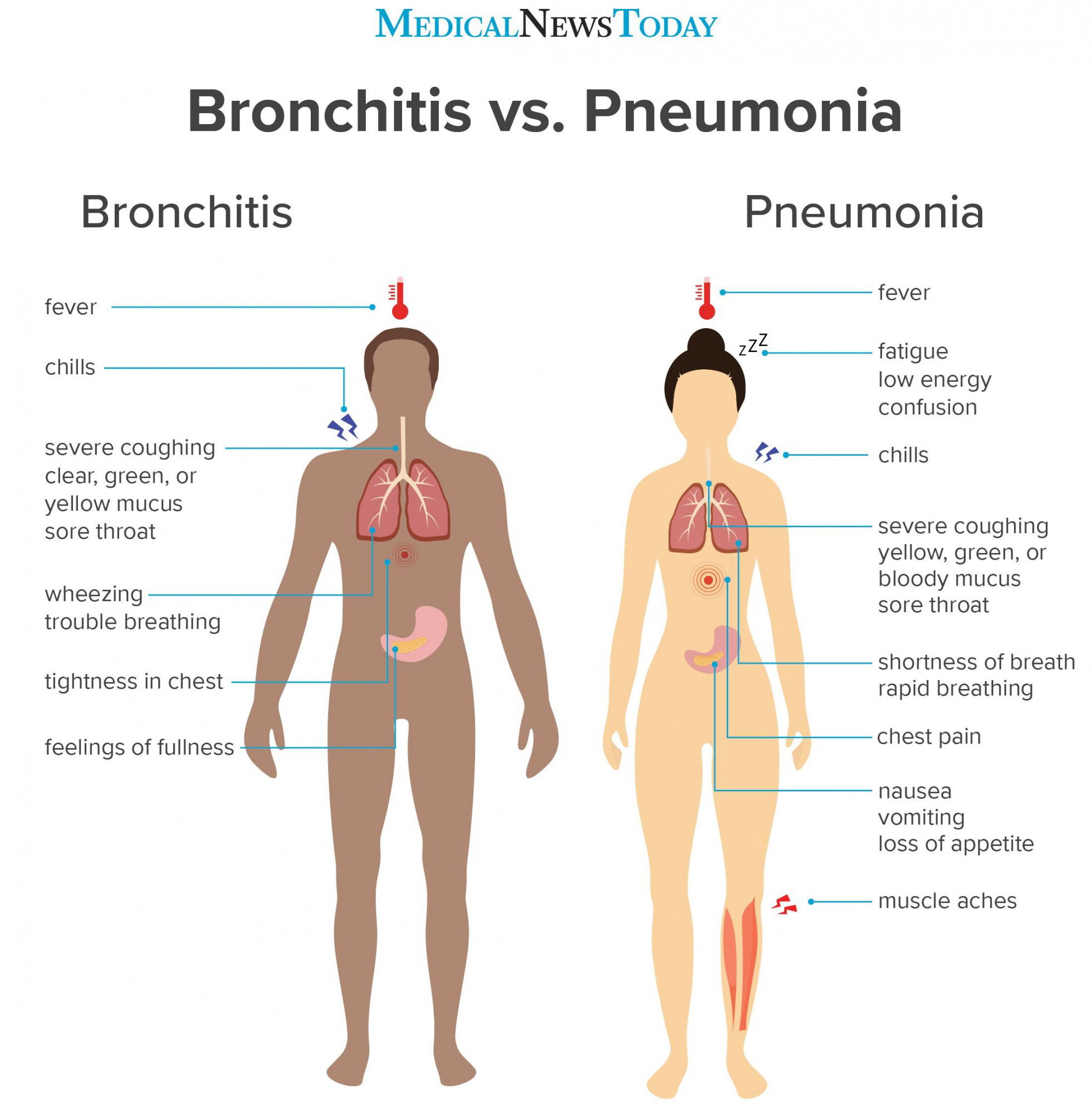
What is Bronchitis?Treatment of bronchitis naturally....
Winter has arrived, cold weather. Time of sneezing, cold, etc.
Unfortunately for me, after a few days of persistent cough and chest pain and headache, due to the currently active Covid-19, I decided to see a doctor. Fortunately, it is not the Covid that is in question, but bronchitis. That is why I will tell you a little bit about what it is and how it is treated naturally.
https://www.youtube.com/watch?v=YiykIrJcxuI
Bronchitis is an inflammation of the mucous membranes of the airways (bronchi).
Bronchitis is not life-threatening, but as with other infections, it is necessary to go to the doctor in order to receive appropriate therapy.
Bronchitis is divided into two groups: acute and chronic bronchitis.
Acute bronchitis
Acute bronchitis most often occurs as a consequence of infections and the effects of cold air, it most often occurs over the winter as a continuation of a cold, sneezing or some other respiratory infection. Acute bronchitis usually lasts for several days without sequelae, although it can last up to several weeks.
Chronic bronchitis
Chronic bronchitis occurs due to constant irritation of the airways, most often due to smoking. Chronic bronchitis is a disease of regular expectoration, which occurs at least three months a year in the last two years.
It most often occurs in perennial smokers and represents a permanent irritation of the respiratory tract, which reacts to irritation with tobacco smoke by a defense mechanism, such as increased mucus secretion.
The symptoms worsen with each subsequent cold, in which the increased inflammation further damages the bronchial epithelium, creates even more abundant and thicker mucus, makes coughing more difficult and leads to narrowing of the bronchial tubes.
Then the main symptom is a constant cough, or loss of elasticity of the lungs in the case of emphysema (when the main symptom is a feeling of lack of air in the effort due to the slow expulsion of air from the lungs).
.
Here are some tips for prevention and treatment.
Vitamin C helps strengthen your immune system and reduces the intensity and duration of colds and other respiratory problems caused by viruses. Since bronchitis usually starts as a cold, use vitamin C to solve the problem before it becomes a bigger problem.
You can also add vitamin C through food, which includes oranges, kale, kiwi, strawberries, grapefruit, red peppers, green peppers, broccoli.
Ginger can help treat bronchitis. It contains essential oil, then gingerol, spicy, odorless, which has strong anti-inflammatory properties, water, protein, carbohydrates, calcium, phosphorus, iron, sodium, potassium, vitamin C, thiamine, niacin, etc.
Ginger is very healing. Ginger is used to make compresses against bronchitis and asthma. Examinations have shown that no adverse effects have been reported.
Ginger cleanses the body of almost all types of toxins, which are ingested through food.
Garlic is very useful for the treatment of especially acute bronchitis. The main ingredient is allicin, which has antibacterial, antiviral, antifungal and antiparasitic effects. To make a home remedy for bronchitis, you need to take three cloves of garlic, peel them and chop them, put them in a glass of milk and boil them. Drink it in the evening before going to bed.
Turmeric is good for treating coughs. It is also consumed as a medicine against bronchitis by dissolving one teaspoon of turmeric powder in a glass of milk and boiling it. Drink two or three times a day. For faster results, drink on an empty stomach.
Eucalyptus oil is very useful for people with bronchitis. The main ingredient of eucalyptus, cineole, can reduce exacerbation (flare-up of the disease, as well as the return of the disease) and shortness of breath, as well as improve lung function. You need to rub up to three drops of eucalyptus oil on your chest. The oil molecules will penetrate through the skin into the bloodstream and dilate the blood vessels, which speeds up the flow of oxygen to the lungs.
Rest and obligatory state of rest, drinking plenty of fluids, taking vitamins to raise the body's immune response, taking adequate drugs to break down secretions, cough medicines, but also antibiotics - if it is bacterial bronchitis.
**There is that folk proverb ... It is better to prevent than to cure.**
Control and manipulation of people through sublimated messages-Gentle Drilling of the Brain.
Sublimated messages are information that we perceive (perceive) below the threshold of our consciousness, more precisely, they communicate with our subconscious, so the eye and the mind cannot consciously register them, that is. to notice. They are most often inserted into an object (advertisements, sounds recorded below the threshold of audibility, films, images and design, posters, wallpapers on web pages, etc.)
The subconscious mind is the target of bombardment with sublimated messages that come to us from all sides and which try to manipulate our behavior through human "instincts", such as survival (hunger, thirst, dangers of all kinds, sex, social acceptance, security, territoriality).
https://www.youtube.com/watch?v=CCU9GAexvAA
Sublimated means "below the threshold", because messages are transmitted to us at a level that the conscious mind does not register, but the subconscious certainly does. The subconscious sees everything, while the consciousness perceives only a part of what passes through our eyes, and even changes a lot of things. Sublimated advertising was exposed in the 1950s, when it was discovered that some of the television and cinema commercials showed images that the conscious mind could not perceive for a split second, and stimulated the desire for a certain product. There was a sublimated message "I'm thirsty" while there were commercials for drinks.
**Wilson Brian Kay, one of the world's subliminal experts, writes in one of his books:**
**"In visual perception, only a thousandth of the total perception recorded in the brain actually reaches the surface of consciousness. The rest lies unused in memory. Sublimated inserts enhance the perceptual experience of the image, amplifying reactions such as ECG, EEG and GSR - heart rate, brain rhythms and galvanic skin reaction. Emotionally charged, repressed information stays in the memory system for a long time, maybe for a lifetime. In fact, nothing is hidden in the inserted images - certainly not by the artist. when viewers learn to be perceptually flexible, “embedded” messages will become immediately accessible to consciousness. Only what viewers or listeners hide next to themselves is hidden in the blended media. Suppression seems to be a compulsive process that probably occurs to protect the mind from disturbing information that would cause anxiety. "**
https://www.youtube.com/watch?v=dS_kKbIL4dY
This really provides a great opportunity for control and manipulation of every kind. He who uses subliminal - hidden messages gives them a positive or negative connotation; the intention of the one who uses them for the desired purposes determines both their goal and the achieved effect, and if we think realistically, it is obvious that the general population really cannot be informed about the intentions of hidden messages. However, the story of the use and abuse of certain scientific achievements does not end with hidden messages packed in advertisements, posters, movies, series, pictures and designs, backgrounds on web pages. It’s just a lesser known story. What is already known and much talked about and discussed is the role of the pharmaceutical industry and their hidden and secret projects that create a global society, which is more and more dependent on various drugs. It seems to be a chain that has no end anywhere, and each new drug is becoming more expensive, and their healing effects are reportedly much improved.
https://www.youtube.com/watch?v=AhoH026WM0c
We are flooded with subliminal messages and not just from commercials or movies. Politicians and salespeople are versed in neuro-linguistic programming that programs the mind to respond to hidden messages in their speeches. The point is to insert the instruction on a subconscious level so that when it penetrates consciousness, the target people believe it is their own choice.
Stores have subliminal messages in the music they play, telling customers to buy or not to steal. This has already stuck in research on brain stimulation to find ways to stimulate those parts of the brain that lead to a purchase decision or to behave in a certain way.

The Mystery of "Déjà Vu"
What is "déjà vu"?
This is when at one point you feel that what happened to you a moment ago has already happened before, that what is happening to you has already happened to you and that you know exactly what will happen in the next moment.
https://www.youtube.com/watch?v=ut8mYGi0YRs
And then you say the famous one: "Man, this has already happened to me, I've been here before, we've already talked about this!" It has happened to everyone to experience this feeling and to say to the person next to them: "Well, this, just this, it has already happened to me!", But few know that there are four types of this phenomenon
Many claim that at least once in their life they have experienced an unusual feeling that they have already seen or experienced something. What are the causes of the “déjà vu” phenomenon and why does it occur? There are numerous theories about this phenomenon, from being a long-suppressed memory, genetic memory, to reincarnation or a disorder… What is true and what is not?
Already experienced-Déjà veki (déjà expérimenté)
Not very often, but for sure, to feel like what we are saying or doing at a given moment, we have already talked or done, sometimes, maybe yesterday, maybe a hundred and a half years ago, irrelevant. And then, we know exactly what will be said and done in the second that follows. And everything here is clear, familiar, experienced, and faces, and objects, and circumstances. Many identify this sensation with "déjà vu", not finding a reason to dive into the nuances.
Already felt-Déjà senti (déjà ressenti),
In the case of the "Already felt" phenomenon, the same thing happens only on a purely emotional level, without what surrounds us. It would be someone internal, internal, intimate "already experienced".
In any case, the difference in relation to the "already experienced" is found in the fact that it is an exclusively mental event, and that such states, as opposed to the "already experienced", rarely remain in the memory. At least until the next "already felt".
Already visited-Déjà vizite (déjà visité)
The fact that it happens much less often that we feel like we have already been in a room, apartment, house or building, even though we are not realistically, should not be ignored. The rationalist school says that the "victim of what has already been visited" has read a lot about that place, so it seems to her that she has already visited it.
Already heard-Déjà entendi (déjà entendu, écouté)
The symptoms of "already heard" are absolutely close to "already seen" in the broadest sense, or "already experienced" in the narrower sense. Everything is the same, only this happens at the level of hearing. With "already heard", which is especially interesting, one has the illusion that the unusual flow "from today to yesterday and back" can be more easily controlled and prolonged with less effort than is the case with "already experienced".
https://www.youtube.com/watch?v=foVMwJtlR5s
So far, this has been closely studied in connection with epilepsy, because it often happens that patients experience this phenomenon before the attack.
The real reason why this happens to healthy people is not known, but what we know for sure is that the same parts of the brain are involved in which the information we receive is connected to our memory. This phenomenon is described as the result of a "delay" between what we see and the time it takes our brain to record a moment, and a "delay" can again occur due to a certain error in the nerve endings.
The term "déjà vu" came into use when the French philosopher and researcher Emil Borjak coined the term in 1876. Proponents of psychic phenomena soon associated this phenomenon with the existence of a past life, while early psychologists and psychiatrists discussed various theories to explain its existence.
Sigmund Freud attributed "déjà vu" to repressed desires, and one of the folk beliefs says that it is the result of accumulating life experience. However, scientists claim otherwise.
We can all agree on one thing, and that is that “déjà vu” things are something really phenomenal.
Sad Reality of Mother Earth...
Each of us affects our environment in different ways. By our existence and action we change nature, sometimes for the better, but unfortunately, very often in a bad way… We consume its riches, pollute water, air and land, poison and destroy it.
https://www.youtube.com/watch?v=WmVLcj-XKnM
In the beginning, man adapted himself to nature. He was satisfied with what the Earth gives him: clean air, spring water, juicy fruits from the trees.
Over time, man became more and more greedy and made the connection between him and the planet Earth stick to only one thin thread, he is not even aware that it can be broken at any moment. The earth got sick. It's the man's fault.
https://www.youtube.com/watch?v=JgvLSjbvjOs
The flowers began to wither, the trees stopped breathing for us. In the place where green grass used to grow, now there is only a pile of garbage. Once clean, blue-blue rivers are now polluted with man-made garbage. And the sky, once crystal clear, blue, now shrouded in dirty gray. What needs to happen for the human race to realize that everything it does does not work in its favor?
https://www.youtube.com/watch?v=1ReuOnKSi0s&t=34s
All that he does means only one thing - man has betrayed the nature that created him. He was too busy to listen to nature's request to preserve her, he was not able to hear his planet mourning, crying. Nature is magnificent. She is the most beautiful thing the human eye has ever seen. Yet nothing lasts forever. And human negligence will accelerate that decline. Every machine that man has made, in order to make his life easier, releases toxins into nature. Every factory smoke affects the quality of the fresh air we need. Each spray causes poisoning. So we need to open our eyes well and look around. Even when we do, we will hardly see the neighboring building from exhaust fumes and smog.
https://www.youtube.com/watch?v=pOFYJv_Hzww
There are countless ways to preserve nature, never say: Ah, what I do is a trifle, what can I do here. You can! We can all! The golden rule applies here: And a little is a lot! Each of our contributions is important and all together lead us towards the same goal! Let's leave our children the most valuable heritage: A clean and healthy planet Earth!
**I hope that it will not be too late when we realize that the Earth does not belong to man, but man belongs to the Earth.**

Coca-Cola - a harmful drink for the body
Coca Cola is the most famous drink, and behind the word "OK" is the second most famous word in the world. It was invented in 1886 by pharmacist Dr. John Pemberton, and its recipe is one of the world's greatest secrets.
Wounded in the Civil War, former Confederate Colonel John Pemberton became addicted to morphine. So he went in search of a substitute that did not contain opium, and the end result, which he prepared in his pharmacy in Columbus, Georgia, served as a prototype for a Coca-Cola recipe; he called it "a brain tonic and an intellectual potion."
Although the drink is bottled around the world, the syrup is made only in the United States.
Coca-Cola as a word comes from two main ingredients: coca leaf and cola nut. The coca leaf extract was essentially cocaine, and the cola nut gave caffeine.
Since Coca-Cola contains caffeine citrate, the Coca-Cola giant hired the company Stefan from Illinois, which is the only one that is legally allowed to import coca leaves to America. Such leaves, from which cocaine is usually obtained, are imported from Peru, and the pharmaceutical company extracts cocaine from the leaves for its further processing, and the leaves are then sold to Coca-Cola.
Coca-Cola was originally conceived as coca wine, first made in France in the 1860s; which was a mixture of cocaine and wine, Pemberton's original recipe says that it takes about 140 grams of coca per 3.8 liters of syrup, which is quite intoxicating. Before cocaine was dumped in 1903, it was estimated that each glass of beverage contained about 9 milligrams of cocaine.
**What happens in our body when we drink Coca-Cola?**
-in the first 10 minutes: the intake of so much sugar in the body causes a devastating effect. The reason why we do not vomit at that moment is that our body then produces phosphoric acid.
- after 20 min: glucose increases the level of insulin, which leads to the pancreas transforming all that amount of sugar into fat. We remind you that one can or bottle of Coca-Cola contains 10 spoons of sugar.
- after 40 min: our body has completely absorbed caffeine. Our pupils dilate, our blood pressure increases. This leads to the blocking of the adenosine receptor (the molecule that is responsible for the sleep process) and we remain awake.
- after 60 minutes: after an hour we will feel the need to urinate. However, what we don't know is that when we urinate, calcium, magnesium and zinc (which were intended for bones) and other important substances that our body could not absorb are excreted. As time goes on, the sugar level will drop, and we will feel slowed down.
In addition to the very important micronutrients you need to absorb, you also excrete a huge amount of fluid. There is a sugar collapse and you just have to fix the condition. If you are used to Coca-Cola, that will be the easiest way for you, and by God, Coca-Cola is just right.
Do you know that we can classify Coca-Cola as a drug, it is very easy to get addicted to it, and the consequences are excess weight and a stomach like a pregnant woman's.
What substances are found in Coca-Cola?
Everything would be nice if this drink was natural and did not contain many chemicals.
Phenylalanine - Affects the secretion of SEROTONIN (happiness hormone) and causes addiction.
PHOSPHORIC ACID - E338 - Reduces bone density because it binds calcium and magnesium and creates salts that are not absorbed. It also causes kidney disease, as well as the formation of stones.
SODIUM CYCLAMATE (Sodium cyclamate) - E952 - An artificial sweetener that was banned in 1969 because it was discovered to form a carcinogenic substance in the body.
ACESULFAM K (Acesulfame potassium) - E950 - An artificial sweetener which is claimed not to have been sufficiently tested before use and which is suspected to be carcinogenic.
ASPARTAM - E951 - Suspected of damaging the brain and causing tumors.
CAFFEINE (Caffeine) - addictive.
SODIUM CITRATE (Sodium citrate / Trisodium citrate) - The taste regulator is in fact an anesthetic (for the tongue) and an anticoagulant
SODIUM BENZOATE - E211 - A preservative that can react with Vitamin C to form Benzene, whose carcinogenic properties are known. It has also been determined that this chemical causes cell damage, because it affects the DNA of mitochondria.
In 2007, it was discovered that sodium benzoate (E211) causes hyperactivity and decreased intelligence in children.
According to this research, IQ drops to 5.5 points. Coca-Cola has stated that it will stop using E211 "as soon as an adequate replacement is found". Of course, Coca-Cola is not the only one that has these ingredients in it, but "Zero Coca-Cola" has nothing else in it.
ASPARTAM - E-951 - One of the most dangerous, and unfortunately the most available food additives. Namely, aspartame is an artificial sweetener that is 2000 times sweeter than sugar (1 kg of aspartame replaces 2 tons of sugar), and at the same time it is low in calories. It is therefore ideal for all “sugarfree
The problem arises when it is taken into the body, because this sweetener at the temperature of the human body becomes poisonous, such as. cyanide. The worst thing is that it has a delayed effect (ie the consequences are felt years after taking it, because it is constantly deposited in the body). And it is a direct cause of multiple sclerosis and lupus (and according to some, cancer).
`https://www.zdravisimo.com/blog/koka-kola-stetno-pice-za-organizam.html`
**We hope that your eyes were opened after reading this text, and that you will think twice next time before you grab a bottle of Coca-Cola. The most important thing is to preserve your health, so instead of Coca-Cola, we recommend a class of natural juice from freshly squeezed fruit.**
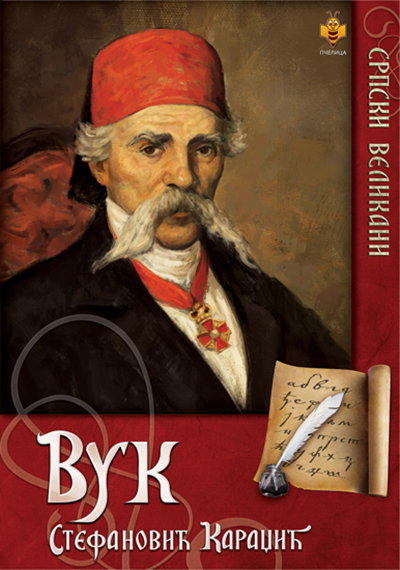
Vuk Stefanović Karadžić - Reformer of the Serbian Language
Vuk Stefanović Karadžić was a Serbian writer, philologist, linguist, reformer of the Serbian language and one of the most important figures in the history of Serbia, the creator of the first dictionary of the Serbian language is the most important figure in Serbian literature of the first half of the 19th century.
His greatest contributions are the writing of folk literature, which until then was exclusively transmitted orally, and the reformation of the Serbian language, which created one of the simplest and most logical spelling systems.
Vuk was born on November 6, 1787, in the village of Tršić, in Serbia, which then belonged to the Ottoman Empire. His parents, Stefan and Jegda, were farmers and before Vuk they gave birth to five children who, unfortunately, all died very young. When they had their sixth child, they named him Vuk, after a strong wild animal, to protect him from witches and death.
Vuk learned to read and write from his cousin Jevta Savić Čotrić, at that time the only literate man in the area. After that, he continued his education in Loznica, but due to illness he had to leave school. His parents sent him to the Tronoša monastery near Šabac to continue his education, but when Stefan saw that Vuk kept more cattle than he was educating, he decided to return him home. In addition to problems with schooling, as a young man he also faces serious health problems. Due to gout, he was sent to Pest for treatment in 1810, but after unsuccessful treatment he returned to Serbia.
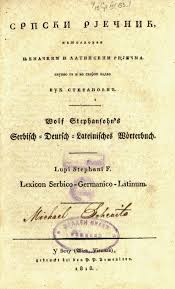
The Turks conquered Serbia again in 1813, and then Vuk went to Vienna to study. There he learned German and Latin and enjoyed Western culture. Shortly after his arrival, he attracted the attention of Jernej Kopitar, an Austrian critic who read Vuk's article written in the popular Serbian language. Vuk published his first collection of folk songs in 1814 - "Mala prostonarodna slaveno-serbska pjesnarica" and a grammar "Pismenica serbskoga jezika", in order to help readers better understand his book. Encouraged by the success of these two books, Karadzic published "Narodna srbska pjesnarica" next year.
In 1818, he published the first edition of the "Serbian Dictionary", and it consisted of a total of 26,270 words taken from the speeches of the people in Srem, Vojvodina and Serbia. In the same year, 1818, Vuk published an extended edition of grammar. In the new grammar, he used Adelung's principle, ie ... "Write as you speak, and read as it is written". which made spelling much easier. Vuk believed that each voice must have only one letter, which greatly simplified grammar and spelling. From the previous alphabet, he removed all unnecessary characters that were written but not pronounced. In contrast, Vuk created new characters by merging individual letters with a thin semi-vowel.
Vuk Karadžić died in Vienna in 1864 with a book of folk songs in his hands, which, as he pointed out, he had been doing as his "favorite job" all his life. His language was not officially adopted as a literary language until 1868, four years after Vuk's death.
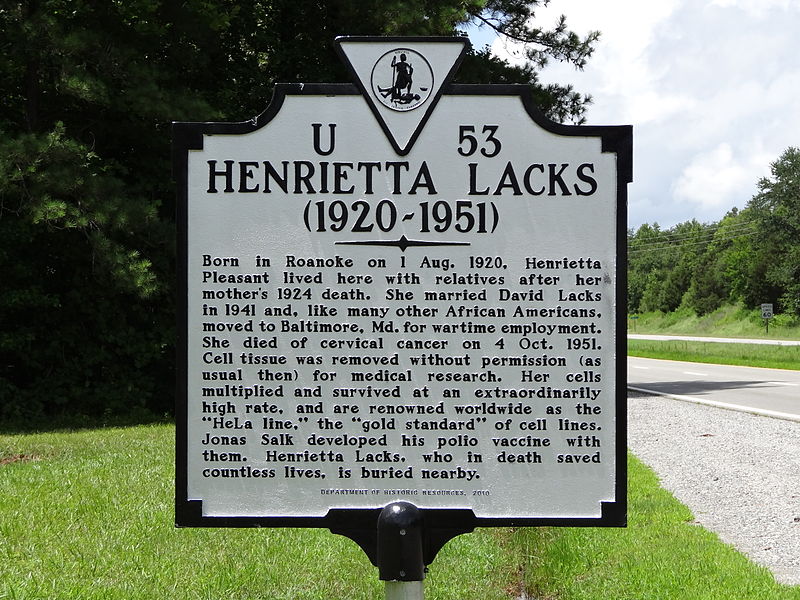
The sad life story of the mother of modern medicine...
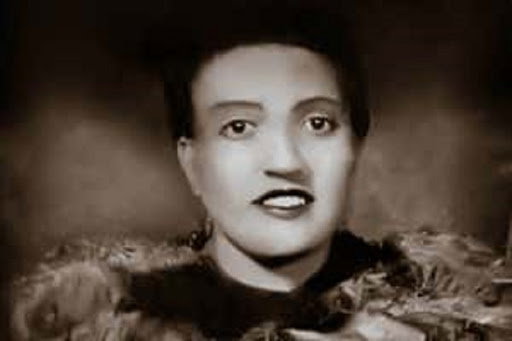
Henrietta Lacks, a woman who continued to help humanity even after her death.
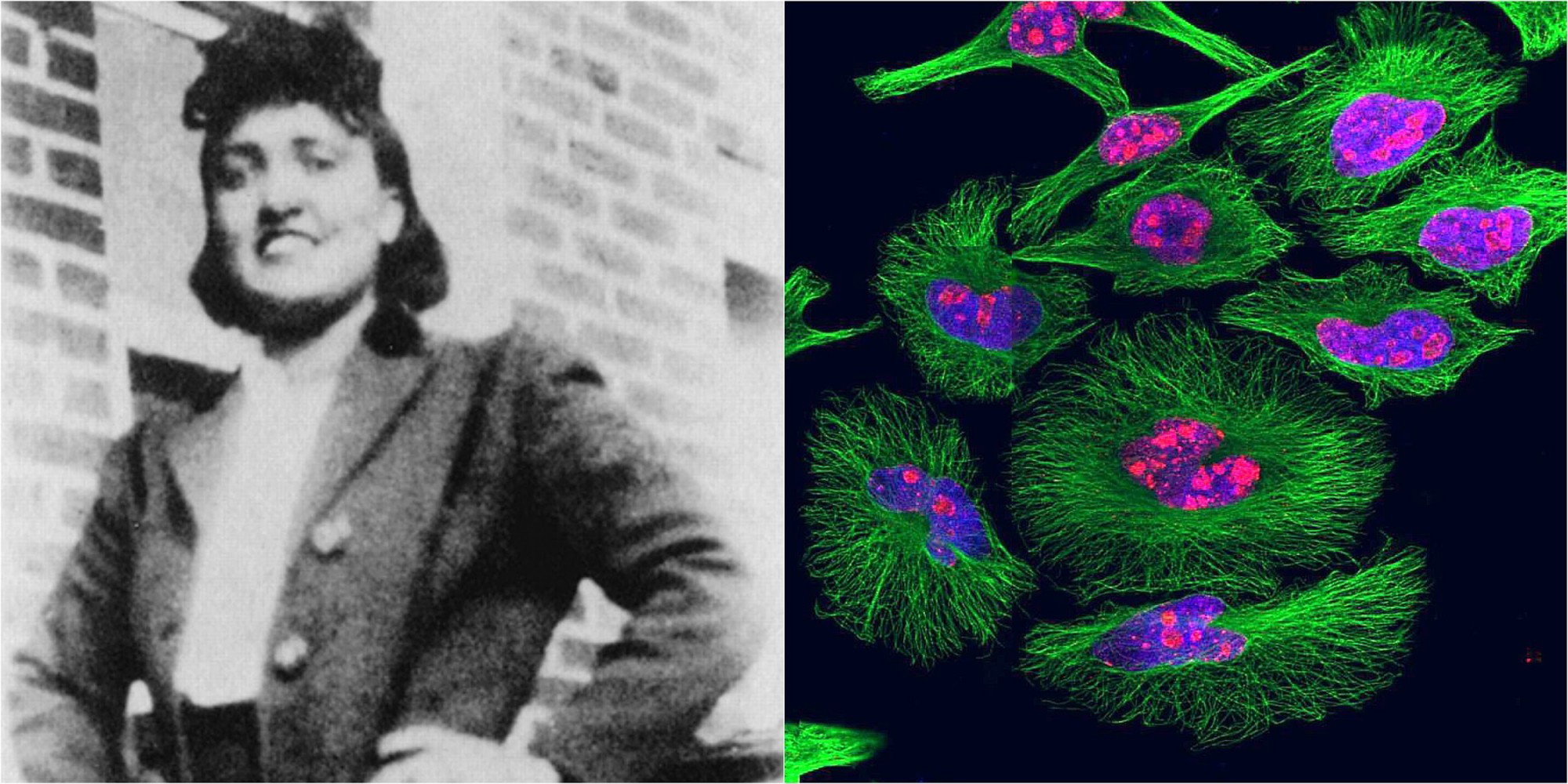
This African-American woman from a poor family, originally from Virginia, who grew up on tobacco plantations, was diagnosed with cervical cancer at the beginning of 1951, when she was 30 years old. A mother of five, who was busy caring for children and working in the fields, neglected her health. After the birth of her fifth child, she started getting pains, but she constantly ignored them. After a certain time when the pain was unbearable, she went to the doctor. Unfortunately, it was already too late for her. During the examination, it was clear to the doctors that it was cervical cancer, which was confirmed after the biopsy. What is very interesting in this case is that these were the first cancer cells that (HeLa cells) were taken and that survived and constantly developed. Her cells were used for various researches, among other things, for finding a vaccine against polio ... etc ....
https://www.youtube.com/watch?v=sXY6-wLesYY
What is devastating is that Henrietta was not asked for permission to take samples, nor was she informed that they had taken them. Scientists and doctors did not want to reveal her identity so as not to have problems with the law in their further research because the cells were used for scientific purposes without the knowledge and consent of Henrietta's family. They sold those same cells to various pharmaceutical companies and gained great wealth.
She never found out how her cells became important for science and enabled many to earn millions. It was the first biological material to be bought and sold.
Her descendants still live in poverty.
Cervical cancer can be prevented with a vaccine, and it can also be cured, if it is detected in time, through preventive examinations.
**THANK YOU VERY MUCH HENRIETTE LACKS FOR YOUR CONTRIBUTION TO MEDICINE.**
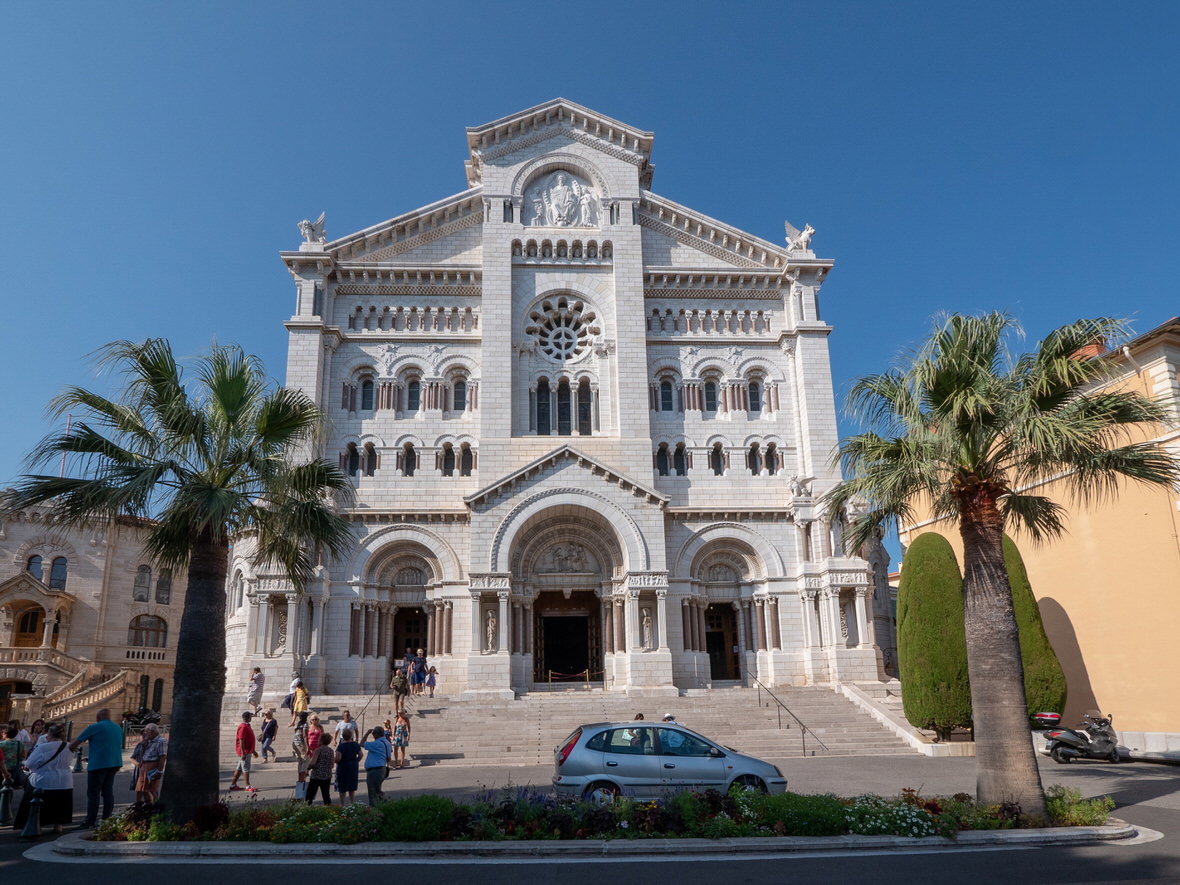
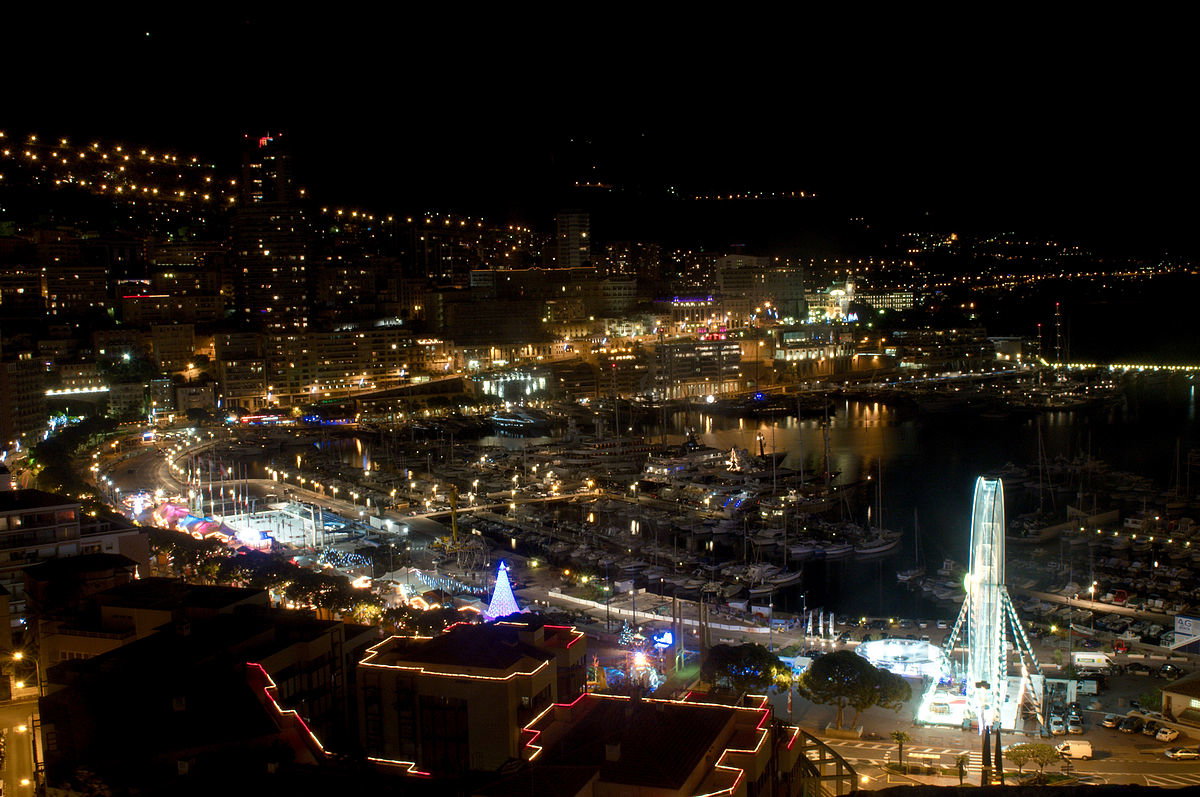
Monaco, the land of glamor, gambling and formulas.
The Principality of Monaco, after the Vatican, the second smallest country in the world (1.95 km2), is the main tourist center of the Cote d'Azur. Widely known for its large number of casinos, which are the main source of income, Monaco is also attractive for longer stays. Since taxes are not collected, the shores of the Mediterranean Sea, surrounded by France, are a place where more and more people are moving in to avoid taxation in their home countries.
https://www.youtube.com/watch?v=Cs-q9_8SO7o
The whole area was named Monaco after Heracles Monoikos, to whom Greek immigrants built a temple in the period before the new era. The history of today's principality was mostly written by the Grimaldi family, who ruled Monaco for more than two centuries until it fell under French rule. However, it was soon returned to them so that after the Congress of Vienna in 1860. belonged to Italy. France has always aspired to take over Monaco.
An interesting fact from not so long ago is related to the marriage of Prince Rainier III. In order for Monaco not to fall under the rule of France, Renier had to have an heir. He meets Hollywood diva and Oscar winner Grace Kelly at the Cannes Film Festival three days after meeting his family. They were married on April 19, 1956, and had three children, of whom Albert II became heir to the throne.
https://www.youtube.com/watch?v=Q4ea9NQfoHk
Monaco is one of the most densely populated countries in the world. It is inhabited by French, Italians, Monaco and as many as 21% of "national minorities" (125 different nationalities). The official language is French with a wide use of English and Italian. There is a wide freedom of religion guaranteed by the Constitution.
It is interesting that Monaco is a country that does not officially have a capital, but Monte Carlo performs that function. A paradise on earth for the rich and famous, full of casinos and luxury hotels, shining with glamor, especially from Hollywood.
The state does not collect taxes from the citizens of the principality, which is why a large number of people live in the state who try to avoid taxation. Monaco is not a member of the European Union, but it is very connected with the EU customs union with France. The principality won the right to issue its own euro coins.
Monaco is divided into 6 districts:
Monaco-Ville, old town,
La Condamine, port area and shopping center,
Monte-Carlo, residential area and casino,
Fontvieille, a new neighborhood by the sea,
Le Larvotto, beaches,
Les Moneghetti, northwestern residential area.
A little interesting about Monaco.
The national animal of the Principality of Monaco is the hairy caracar, while the national plant is the carnation.
The most densely populated country in the world, about 17,500 inhabitants per square kilometer.
Unemployment 0 percent!
108 nationalities live in Monaco.
A minimum of 300,000 euros is needed to open an account in the Bank of Monaco!
The country, in width, can be crossed on foot in less than an hour.
Citizens of Monaco are banned from gambling in the Casino.
The third most expensive country in the world for buying real estate - the most expensive penthouse in the world is in Monte Carlo and it was paid 256 million pounds.
Glamor, games of chance, Formula 1 races and the tennis tournament of the association are a small country that is swept by the waves of the Mediterranean Sea. The beauties of the Cote d'Azur cannot, but must not be bypassed when traveling to southern France and Spain. Paradise on earth in Monaco is one of the favorite destinations of world stars
She is Anna Mae Bullock or Tina Tarner.
She is eighty years old, and she is still the most dynamic soul and rock singer in the history of music. The definition may seem exaggerated, but her long career full of fantastic success speaks volumes. Although she is no longer young, this artist still has incredible sex appeal, as in the very beginning. She has always been recognizable for her incredibly energetic performances and great ability to delight the audience in a unique way, as no woman from the music scene had managed before.
She has sold 200 million records, won eight Grammys, Rolling Stone magazine put her on the list of Immortals - the greatest performer of all time, won her place in the Rock and Roll Hall of Fame Museum and won the Grammy Hall of Fame.
An unruly hairstyle, a raspy sexy voice, the best legs in the world of show business, belong to her.
Born in 1939 in Natbush. She is the daughter of Zelma Priscilla Currie and Floyd Richard Bullock. She was born on the Poindexter farm, where her father worked as a supervisor. She had two older sisters, Evelyn Juanita and Ruby Alline. When her parents moved to Knoxville to work on the construction of military facilities during World War II, Anna May was left with a strict and very religious grandmother and grandfather. the sisters were cared for by their grandmother, after whose death they went to their mother in St. Louis. There, Ana attended Sumner High School, and in the evenings she often went to nightclubs with her sister.
At the Imperial Club, as a 17-year-old, she met blues guitarist Ike Turner, who performed there with his band. Ana was equally thrilled with Ike and his music, and when he heard her sing, he invited her to join the group and she soon became a permanent backing vocalist.
https://www.youtube.com/watch?v=5qfJmLXcu54
Soon, Ike and Tina filled small and big nightclubs, where the audience did not come so much for the songs as for the incredibly spectacular performances and energetic Tina. She gained world fame with an extremely notable performance at the Rolling Stones concert in 1969, where Ike and Tina played as a pre-band, and Mick Jagger, many claim since then, imitates some of Tina's movements on stage. Ike Turner was an exceptional musician and the brains of the whole team, but also an alcohol and drug addict, possessive and very prone to violence. He often beat Tina, made her appear ill, cheated at every step, which is why he was often targeted by the media. Constant harassment, hospital stays, nose surgery after beatings and suicide attempts finally forced Tina to leave him in 1976.
https://www.youtube.com/watch?v=GC5E8ie2pdM
After another quarrel, a bruise escaped from the hotel room. She had only 36 cents and a fuel card in her pocket and hid with a friend for the next few months. The marriage officially ended in 1978, and Tina did not ask for anything, neither money nor real estate, she just wanted to keep the stage name that Ike gave her, because it was his last name. Capitol Records asked to record a new album, and Private Dancer was recorded in a record 14 days. After that, in 1984, nothing could stop Tina Turner until today, there were a number of awards, successes, concerts, collaborations with David Bowie, Brian Adams, Mick Jagger, Eric Clapton, Eros Ramazzotti, a role in the film Mad Max 3.
The rest is all known history ..
**1. What's Love Got To Do With It**
**2. We Don't Need Another Hero (Thunderdome)**
**3. Typical Male**
**4. Proud Mary**
**5. Better Be Good to Me**
**6. The Best**
**7. Private Dancer**
**8. I Don't Wanna Fight**
**9. What You Get Is What You See**
**10. It's Only Love (duet with Bryan Adams)**
**Simply the best.**
A material used in all spheres of human life - glass.
Rare are the materials that have improved the quality of life so much with mass use as is the case with glass. Today, it is used in all spheres of human life - from numerous tools in the household, primarily in the kitchen, through the electronic device industry, to architectural elements. Modern housing would be practically unthinkable without glass.
In nature, it can be found in the form of volcanic glass, obsidian, which is formed by the pouring of hot magma in which quartz (silicate) sand, the basic raw material for glass, melts at huge temperatures, and then cools and hardens.
Glass is a material that has been in use since the very beginnings of human civilization. The first vessels were made in Egypt and Mesopotamia around 1500. BC Glass objects, remains of workshops with molds and parts of a glass melting furnace were found there.
https://www.youtube.com/watch?v=ThddtcBGdGQ
The technology of making glass is slowly spreading around the ancient world, so the Phoenicians, Assyrians and Palestinians had developed production. The first manual for making glass was written around 650. BC and was kept in the Assyrian library of Ashurbanipal. The turning point in the development of glass is the discovery of Syrian and Palestinian workers who discovered the art of blowing glass at the beginning of the 1st century. This invention led to a dramatic change in the production of glass because its production was significantly cheaper and more affordable. With the spread of Christianity, artificially colored glass spread throughout Europe and became the dominant art form in the new millennium.
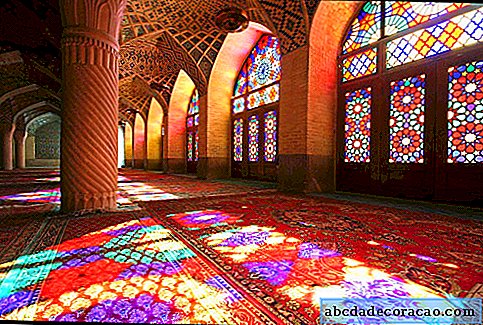
There are numerous examples of churches and cathedrals with miraculously beautiful stained glass windows composed of numerous pieces of stained glass, and one of the oldest among them is in the monastery of St. Paul, founded in 686, in Jarrow, England. At the beginning of the new millennium, around the year 1000, Venice took the lead in glass production, and the small island of Murano became the center of its production and improvement. For centuries, the Venetians multiplied the wealth of their Republic precisely in the production and sale of glass.
https://www.youtube.com/watch?v=6gojmXkLW-0
Murano glass masters had a privileged position in society, almost like nobles, they could marry their daughters to the best Venetian houses, they were exempt from persecution and were well paid, but at the cost of their lives they were not allowed to leave the city. rest. The law prescribed the death penalty for any of them who would leave Venice or reveal a secret to anyone. A real revolution in glassmaking followed when Sir Alastair Pilkington invented the procedure for obtaining float glass (float - float, float). Its automated production started 6 years later and today it is the standard method for glass production.
Liquid glass slides (floats, floats) on the surface of molten metal in a chamber with a controlled atmosphere. The mass is gradually cooled and glass of ideally flat and parallel surfaces, of uniform thickness, is formed.
https://www.youtube.com/watch?v=IgvJbq2k6gM
There are glass blowers who are real artists. The most famous are the masters, of course from Murano. It is very fascinating how various glass objects are obtained from one hot, glowing mixture.
Murano glass has such a range of colors that ordinary glass does not have, thanks to a special process of handmade glass. What gives a special stamp to each object made of Murano glass is the skill of the masters, who make each object by hand and that gives a special value to these objects, which as such enrich the space in which they are placed.
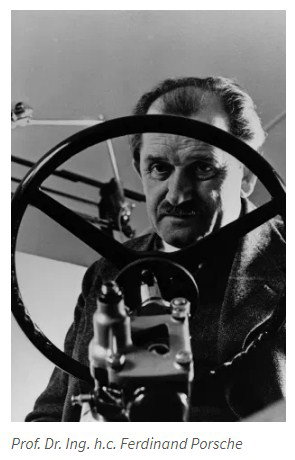
Dr. Ing. h.c. F. Porsche.
***There is something in the auto world called the "holy trinity of motoring." It consists of Ettore Bugatti, Enzo Ferrari and Ferdinand Porsche.***
Each had their own path, a completely different approach to the same passion, but the same genius, the same vision, far ahead of their time. This time I will write a little about Porsche.
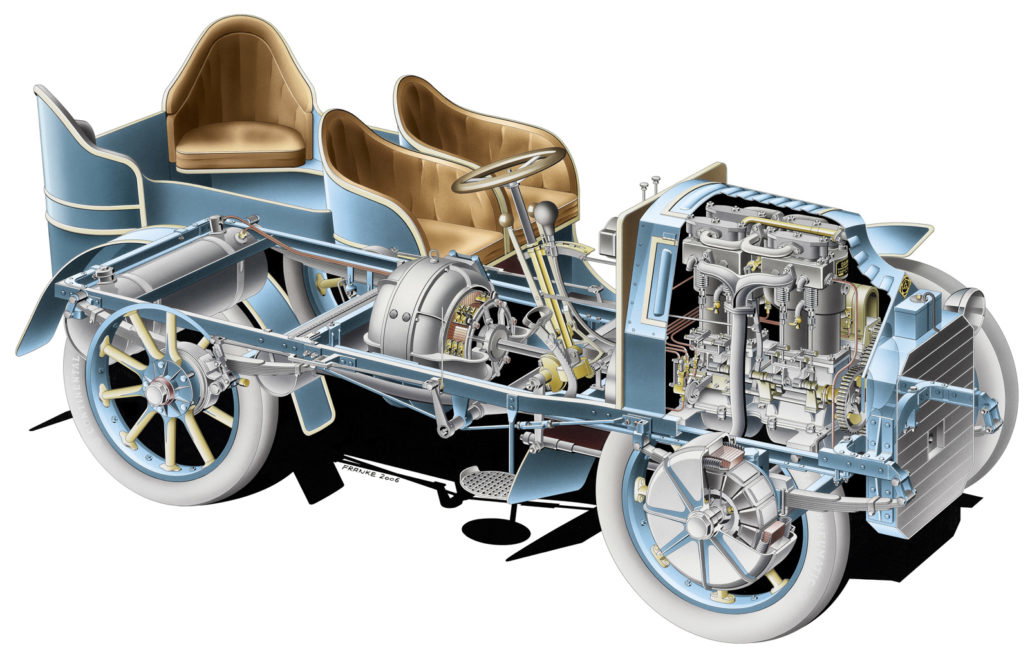
An Austrian-Czech engineer, Ferdinand Porsche was born on September 3, 1875 in Maffersdorf, Austria-Hungary. The first significant project in which he participated was the System Lohner-Porsche (1898), a car more like a carriage, which was powered by two electric motors with the help of batteries weighing a total of 1800 kg.
Porsche started working in his father's factory when he was fifteen, and he saw a light bulb there for the first time. He was thrilled with it. Porsche went to the carpet factory every day to find out as many details about the factory operations as possible from Ginski's manager. Porsche secretly started making electric cars in the attic of the house, using parts that he carefully assembled.
Having shown great interest in electrical engineering, he went to the Imperial Technical School in Reichenberg.
Returning home one evening, Porsche's father, Anton, was surprised by the blinding light coming from his house. Porsche had just completed the construction of its own electric generator and installed electric lighting throughout the house. From that moment, a successful future began for Porsche ... He went to university in Vienna, and started working for Bela Eger, a manufacturer of electrical appliances from Vienna. During his time at the company, he developed something completely revolutionary, even by today’s standards, an electric motor at the very point of the car, mounted on the hub.
https://www.youtube.com/watch?v=E8LIAxUtt0g&feature=emb_logo
In 1898, he transferred to another Viennese company, Jakob Lohner (Lohner-Werke), which at that time was engaged in the production of carriages for, among others, Emperor Franz Joseph I, as well as for the monarchs of the United Kingdom, Sweden, or Romania.
Two years earlier, this company produced its first car presented in Vienna, under the codename C.2 Phaeton P1, where the P1 mark meant "Porsche, number 1".
https://www.youtube.com/watch?v=SG2-LNbNnYQ
What bothered these vehicles was not the weight of the battery, but its durability, and that is why in 1899, instead of massive batteries, Porsche inserted the SUS unit (Internal Combustion), produced in the German Daimler (Mercedes-Benz) and used it as a generator of electric motors mounted on wheels.
Lohner-Porsche Mixte Hybrid.
With a speed of "even" 56 km / h, several speed records were set, and one victory in the rally was achieved.
It officially went on sale in 1901 and by 1905, over 300 chassis had been sold, mostly powered by a single axle, front, or rear. Chassis that were driven on both axles were used for buses, but only a few of them. Later, the prototype of the vehicle used for racing and breaking records got electric motors on all 4 wheels, and thus all-wheel drive. The prototype managed to reach a colossal 112.6 km / h during that time and along the way broke several speed records of that time. Therefore, in 1905, he even received the award for the best Austrian automobile designer.
https://www.youtube.com/watch?v=TmeaYwN63AU
And now a little about the present.
Porsche is a German manufacturer of super sports cars. They were created in 1931, they were founded by Ferdinand Porsche and their headquarters are in Stuttgart and they are owned by the Volkswagen Group. One interesting thing, related to the Porsche. They are the only car factory in Germany that does not respect the speed limit of 250km / h, so there is no speed limiter on any Porsche car model.
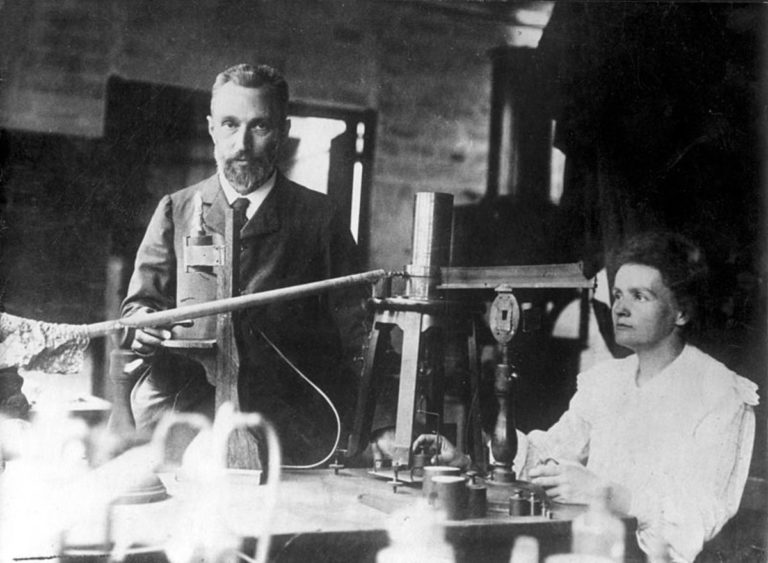
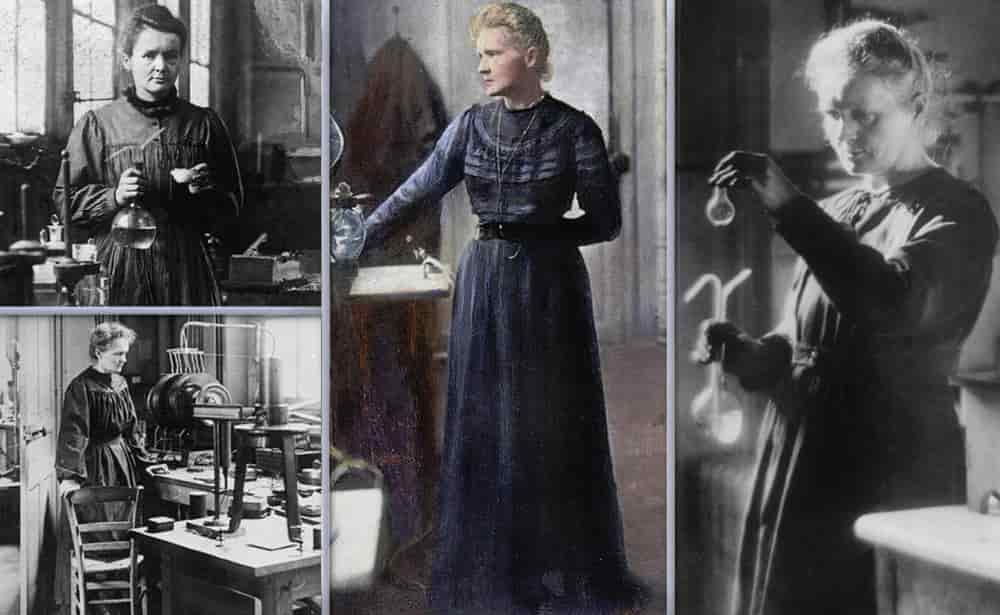
To this day, she remains the only woman to have won the Nobel Prize twice.
She was born as Marija Sklodowska on November 7, 1867 in Warsaw, and her father was a distinguished professor. She received her primary education in local schools, while her father taught her science and scientific research on his own.
She quickly became a member of the student revolutionary organization, which is why she felt that she should leave Warsaw, which was then under Russian rule, and for a short period she went to Krakow, which was dominated by Austria.
https://www.youtube.com/watch?v=L2v38cPnc1g
He moved to Paris in 1891, where he enrolled in the study of physics and mathematics at the Sorbonne University. There, in 1894, she met Pierre Curie, a professor at the Department of Physics, whom she married the following year. The marriage, which Maria cautiously accepted, grew into a strong, but peaceful and stable love affair. She felt that they understood each other without a single spoken word. She wrote to her sister Broni that she married the most wonderful man in the world. Unfortunately, Pierre's life ended in 1906 when he was run over by a horse-drawn carriage. Maria took his place as a professor at the Department of Physics, and thus became the first woman to teach at the Sorbonne.
Early research by Maria and Pierre was conducted in difficult conditions. Namely, the laboratory in which they worked was in poor condition and required a lot of remodeling, and at the same time they both had to hold classes to earn a living, which made their work even more difficult.
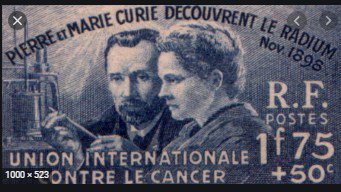
Mary's desire to isolate pure uranium took on mythical proportions. Ms. Curie has worked hard for years, with no money, no help, exposed to ridicule and contempt from fellow scientists to isolate pure radium salts and use them to find a cure for cancer. In July 1898, the young couple announced the discovery of a new chemical element, polonium. At the end of the year, they discovered another "radium". They were also engaged in the research of radioactivity.
Her research was of crucial importance for the development of x-rays, ie. X-rays, which are used in surgery. During World War I, Maria was credited with bringing X-ray equipment to hospitals. The International Red Cross placed her at the head of its radiology center, and she was also in charge of teaching nurses and reprimanding the new technique.
Building on the work of the German physicist X-ray and the French physicist Becquerel. Mary and Pierre, along with Becquerel, received the Nobel Prize in Physics in 1903. Dedicated to the work she began with Pierre, in 1911 she was awarded the Nobel Prize in Chemistry to extract elemental radon.
The Nobel Prize Committee did not want Maria to receive the award because she was a woman.
And yet, Maria Curie is the only person to have won the Nobel Prize for multiple sciences.
And in the end, her scientific work was the cause of her death.
She died on July 4, 1934, from leukemia caused by exposure to high levels of radiation during her research.
**To this day, she remains the only woman to have won the Nobel Prize twice.**
The most famous abbreviations in the world....
The abbreviation OK is universal and there is almost no person in the world who would not understand it. However, there are several theories as to the true meaning of this word
Okay, O.K. or OK, is a word derived from Anglo-American English. Its conveyed meaning is that everything is fine. The term is considered one of the most popular in the world, and is used in many languages, including Serbian.
The origin of you, you could say - the international abbreviation, which "covers" the expression "OK", is more than interesting. In linguistic discussions and etymological dictionaries, several different explanations are given as to how it came into being. There are as many as a dozen theories about the origin of that abbreviation. They all agree on only one thing: it originated in the United States.
The gesture of the word OK with the fingers is expressed by the thumb and forefinger forming a circle. However, the sign is interpreted differently in different regions of the world. In South America, this gesture can be offensive or vulgar.
There are many theories and these are some of them.
The first of them refers to the old Indian expression okeh, meaning: "that's right", "that's right". It was then transferred to the American English pronunciation as oukey ("ou-kei"), so the abbreviation OK was made, with the same meaning as the Indians.
The second explanation is related to the name of an earlier railway officer, Obadiah Kelly, who allegedly confirmed the orderly receipt of postal items, more precisely - packages, with the initials of his name and surname - OK. Later, it got a general meaning: "it's okay".
Some other theories are related to stories that bakers stamped their initials on biscuits, or to shipbuilders who marked which tree was for the outer keel, and to soldiers in the Civil War when they wore an inscription that said zero dead. (zero killed).
The first known written use of the word OK occurred in the "Boston morning post" on March 23, 1839, in the sentence: "He ... would have the" contribution box ", et ceteras, ok - all correct - and cause the corks to fly, like sparks, upward. "
Although the origin of one of the most famous abbreviations in the world has not been precisely determined, everyone knows its meaning well. It is very widespread and is often used all over the planet.
He was remembered as a man who changed the world.
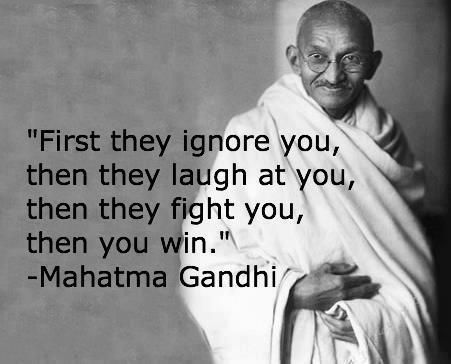
When we think of India, we think of yoga, meditation, Indian saris and the epic “Mahabharata and Ramayana”. But there is also the great humanist Mahatma Gandhi.
Mohandas Karamchand Gandhi, born into a middle-class family in the coastal town of Porbandar (Gujarat), was a very ordinary boy, an averagely intelligent student and law student.
Born in India, he trained as a lawyer in Britain in his youth, and later lived in South Africa where he started the civil rights movement of Indian immigrants.
The term "Gandhism" defines a specific socio-political and religious-philosophical thought that has long since crossed the borders of the Indian subcontinent. His followers are still found in many parts of the world, especially in Asia and Africa. Gandhi's contribution to humanity cannot be measured in words. His religious, political and philosophical ideas were an inspiration to millions of people. Perhaps the ones that are most remembered and most often mentioned are the fight against non-violence, the truth as the only criterion and gender equality.
The topicality of the content "Fight against non-violence" can still be a stimulus to young generations; the life and work of a great peacemaker and humanist are an example of perseverance and mental strength.
After completing his law studies in 1891 (1889-1891), Gandhi returned to India and tried to work in the profession, but was unsuccessful. Two years later, an Indian company that had business relations with South Africa hired him as its legal advisor at an office in Durban.
When he came to Durban Gandhi he discovered that there he was considered a member of a lower race. At the same time, he was stunned by the denial of the civil and political freedoms of Indian immigrants in South Africa. This prompted him to join the struggle for recognition of basic human rights for Indians. Gandhi remained in South Africa for 20 years, often spending time in prison.
Deeply concerned about racism against Indians, he took over the leadership of the "Indian National Congress" in 1921 and reorganized it - across the country he organized campaigns and aid for the poor, to strengthen women's rights and promote a peaceful religious and ethnic environment. He was always on the side of workers, peasants and the poor. He would often clash with indigo plantation owners who exploited workers and organized canteens, sanitation and schools for children in the villages. Such successful examples of his rebellion encouraged peasants across India to initiate similar actions. Gandhi's political philosophy was based on the belief that there was a "greater good" for a society that demanded that every individual sacrifice himself.
Gandhi believed that by nonviolent methods he would show the British that the use of violence was useless and that they would then leave India. Gandhi's political and spiritual influence on India became so great over time that the British authorities did not dare to take any countermeasures against him.
In 1944, the Indian struggle for independence came to its final stage, the British government agreed to the independence of India on the condition that two opposing nationalist groups: the Muslim League and the Congress Party, resolve their differences. Gandhi vehemently opposed the division of India into two states (as demanded by the Muslim League), but in the end still had to agree hoping that peace between the two religious groups would be achieved once Muslims satisfied their separatist aspirations. India and Pakistan became separate states when the British recognized India's independence in 1947.
On January 30, while on his way to the place where he was performing the evening prayer, he was attacked and killed by Nathuram Godse, a Hindu fanatic. Gandhi’s death was experienced around the world as a disaster. He lived the spiritual and ascetic life of a preacher, often spending time in meditation. Refusing any possession of material goods, he dressed in the traditional clothing of the poorest Indians and ate only vegetables, fruit juices, and milk. The Indians proclaimed him a saint and began to call him Mahatma (in Sanskrit: great soul), a name intended only for the greatest sages. Gandhi’s commitment to nonviolence, also known as ahimsa (Sanskrit: non-injury), was an expression of the life path preached by Hinduism.
****Wisdom and perseverance took him far, he was remembered as a man who changed the world.****
A hobbit lived in a hole in the ground....
"A hobbit lived in a hole in the ground" - those nine words were enough to start an avalanche of Tolkien's universe, like a lump on a mountain, whose popularity is still not waning, it is even stronger and stronger.
John Ronald Reuel Tolkien, a respected lexicographer and expert on the Anglo-Saxon and Old Native languages, will nevertheless remain better known in history as "The Lord of the Rings". The army of fans was helped by the broadcasting of films based on his novels, which will result not only in disguise on Comic Horses, but also in the construction of entire settlements modeled on the famous Hobbiton.
One of the most similar real cities to this imaginary one is Alberobelo. This unusual city in southern Italy is known for its ancient architecture dating back to the 14th century, and since 1996 it has been under the protection of UNESCO, as a World Cultural Heritage.
The characteristic, domed architectural style is believed to be due to the Greeks, who immigrated en masse to Italy during colonization between the 8th and 5th centuries BC. On some roofs, various symbols are drawn in white.
White limestone structures, without mortar, made of dry stone, conical roofs and narrow cobblestones represent a traditional old Mediterranean building, characteristic of the region of Apulia.
Whether directly from his rich mind, or to some extent following the example of this Italian city or similar ancient construction, Tolkien created the city of the hobbits in his novel. In New Zealand, near Matamat, there is a farm on which Hobbiton - the city of hobbits - was built, for the purpose of shooting the movie "The Lord of the Rings".
The richest women in the world
They have millions, they can afford the most expensive treatments, clothes made of the finest materials and the most modern cut, so many are wondering what the richest women in the world look like.
Most of the richest women in the world inherited their money, but some of them managed to get dizzying wealth in bank accounts with their work and effort.
When it comes to the richest women, it is not just about singers, actresses, models, but capable women who managed to cope with difficulties and efforts, create billions with work and effort, and thus enjoy their wealth.
He takes the first place
**Françoise Betancourt Meyers xxxxx** billion dollars
Françoise Betancourt-Myers, a long-time leader of the list of the richest women, according to the Bloomberg index, is still at the top of this prestigious list. Her family fortune began to pile up in the early 20th century when a young chemist, Eugene Schuler, developed a hair dye formula he called Oréale.
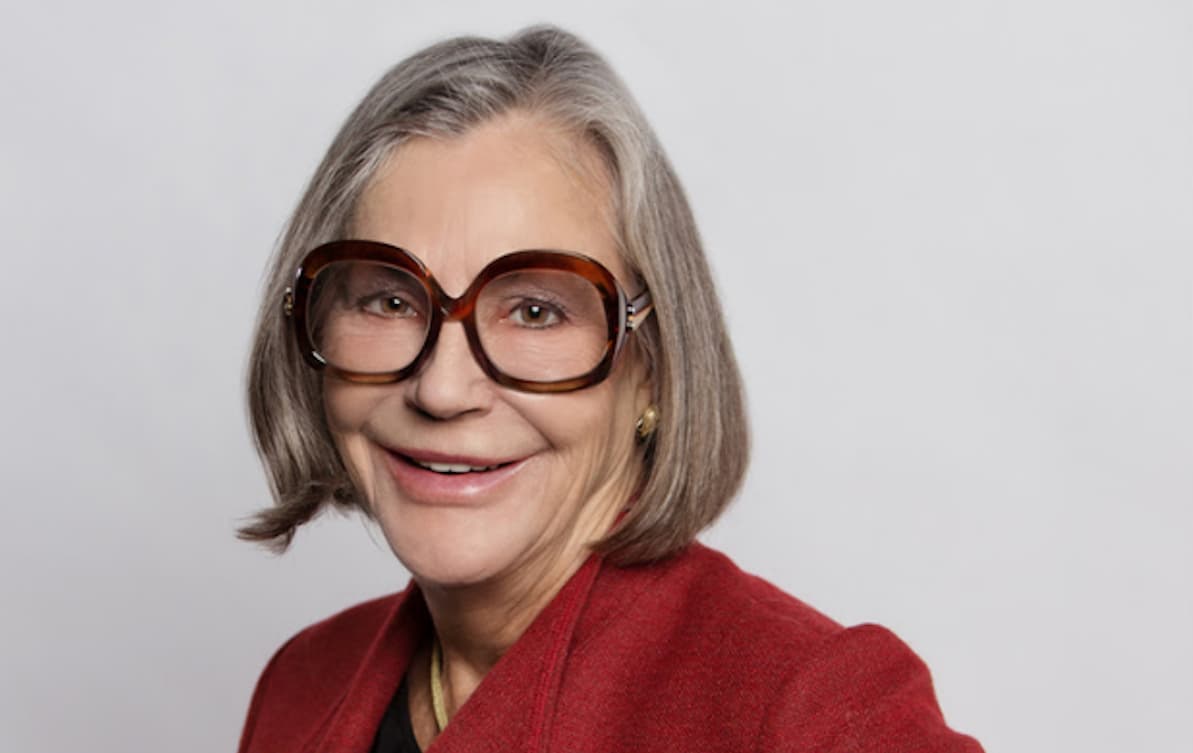
The second richest is Alice Walton, who is "heavy" xxx billion dollars, which is 1.5 billion more than last year. She is the only daughter of Wal-Mart founder Sam Walton, she never took an active part in the business, but inherited Wal-Mart shares and dividends.
Jacqueline Mars has a fortune worth xxx billion dollars, and her grandfather Frank Mars founded the company "Mars", the largest manufacturer of sweets. Together with her brothers, Jacqueline Mars inherited her father's company that deals with pet food and sweets, Mars, but Jacqueline Mars does not actively participate in running the company.
In fourth place is Maria Franca Fisolo, who has a fortune of xxx billion dollars, thanks to her father-in-law, who is credited with Nutella,tic-tac and Kinder chocolate, and her last husband, Michele Ferrero, built the "Ferrero Group" empire.
In fifth place on the list is Susan Kalten, whose fortune is estimated at xxx billion dollars. The richest German, together with her brother, runs a successful pharmaceutical company, and in addition she owns half of BMW shares.
Very successful business women, whether they inherited or built a business empire on their own.
https://www.youtube.com/watch?v=uP0sC_s5EfE
The good old days of my childhood.
I grew up in Yugoslavia, after that in Serbia.
We walked to school and came back with friends. Our dinner time was at 7 p.m.
Lunch at the restaurant never happened. There was simply nothing.
You took off your school clothes as soon as you got home and put on your clothes for the game. We had to do our homework before they let us play outside. We had dinner at the table.
Our phone was mostly in the hallway and had a cable attached, so private conversations didn’t exist
The TVs only had a few channels! We actually had to ask before changing channels
We played hide and seek, hid and searched, football, basketball, between two fires
Staying in the house was a punishment and the only thing we knew about "boredom" was --- "You better find something to do before I find you!"
We ate what mom prepared for dinner or we didn't eat anything.
Everyone was welcome, and no one came out of our house hungry
There was no water in the bottle, we drank from the tap or garden hose outside (and everyone was healthy).
Our favorite treat was a slice of white bread spread with butter and allspice, sometimes with homemade plum jam (it was even tastier with friends)
We watched cartoons on Saturday mornings, and rode bicycles for hours, swam in rivers, walked through forests, meadows. They climbed trees, ate fruit from the branches.
We were not afraid of anything. We played until dark ... the sunset was our time to return home (and our parents always knew where we were).
If anyone had an argument, it was instantaneous and we were friends again the next morning
We respected the elders because all of our aunts, uncles, grandfathers, grandmothers, and our parents ’best friends were extensions of our parents, and you didn’t want to tell your parents if you misbehaved!
These were the good old days. So many children today will never know what it feels like to be a real child.
Good times
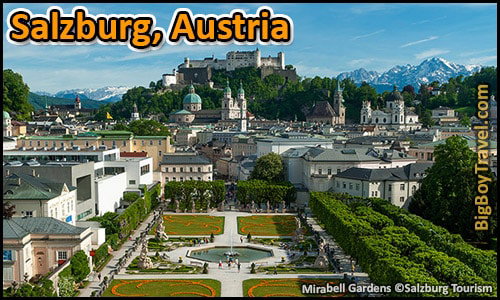
Salzburg, a city of music, beauty and art.
Do you know what I and Wolfgang Amadeus Mozart have in common ?!
A beautiful city, our birthplace.
https://www.youtube.com/watch?v=owI1QBHhbS0
Small, ancient Salzburg is one of the most beautiful baroque cities in Europe. Once the capital of the eponymous state ruled by the Prince and Archbishop of Salzburg, today it offers a combination of city crowds and views of the mountains, all in historical attire. Although named after the salt mines, today it is recognizable as the capital of music. He is certainly much more than the hometown of the great Mozart and the phenomenal Mozart balls. It is full of magnificent architecture, romantic cafes, towers and churches that attract the eye, but it is also modern, with plenty of space for good shopping, food and accommodation.
Salzburg is located in the lower part of the river Salzach and is considered to be the most beautiful baroque city in the west. Mozart's symphonies are deeply rooted in the city spirit and you will see it every step of the way.
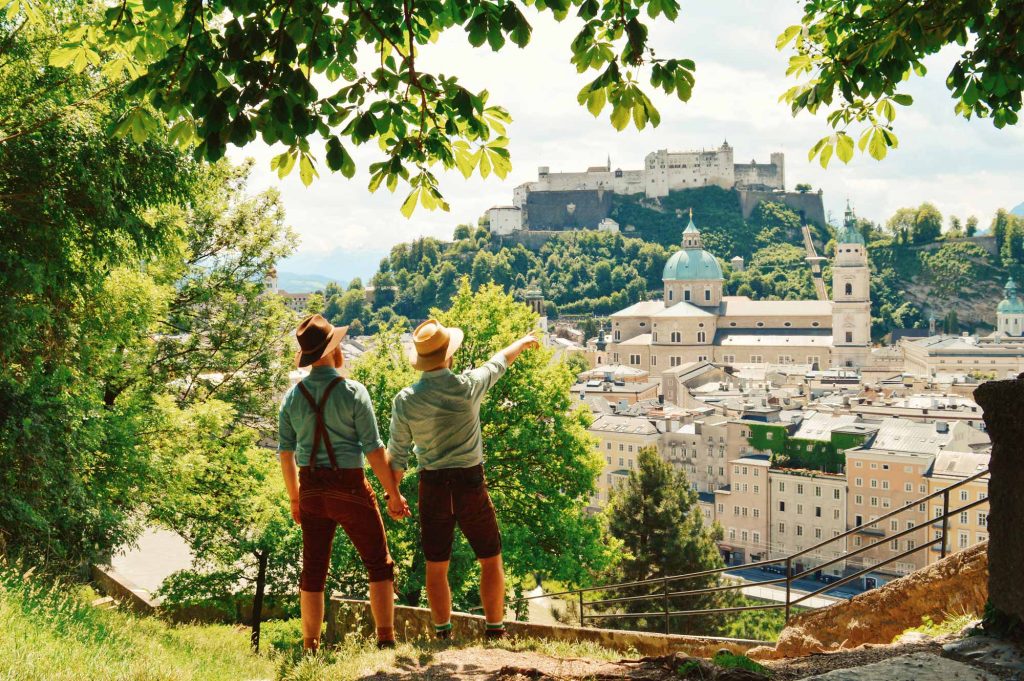
The 11th-century Hohensalzburg Fortress was once home to the Prince of Salzburg. This mighty medieval castle is the largest fortress ever conquered in Europe. Our advice is to take the cable car to the top, which offers a view of the city and the river Salzah, which divides it on two sides.
The Mozart family lived at 9 Getreidegasse for a full 26 years and it is the house where the famous composer was born. The home of child prodigies, which he was able to read, write and compose at the age of five, is today a museum where visitors can see his violin, piano and letters that Mozart wrote to his family.
Hellbrunn Palace or Baroque Disneyland is a masterpiece of architecture located a little south of the city. Here you will see beautiful and humorous fountains, miniature mechanical theaters with 141 moving figures and a museum of folklore, artificial caves…
Mirabell is a castle characterized by beautiful gardens, fountains and statues of Roman and Greek gods, right next to the Salzah River, and was built in the 17th century. The most beautiful room in the castle is certainly the Marble Hall.
Salzburg literally means city of salt. It originated as a place where salt was traded, which was mined and extracted in nearby mines and lowered by wooden boats on the river Salcah towards the city. Even today, you will find shops with different types of salt as well as attractive items made from lumps of salt of different sizes. It is also called the Gate of the Alps.
Its beauty is world-famous as a combination of alpine views and rich architecture. They say that the city was even more beautiful, but that the great fire of 1818 destroyed it well. The city divides the Salzach River into old and new parts.
The old historical center of Salzburg - Altstadt, was in 1996 on the **UNESCO** list of world cultural heritage sites due to the combination of art and architecture. Salzburg is full of narrow streets that are not typical of Central European cities.
`Picturesque shops of the Getreidegasse, Salzburg, Austria.`
The reason for this is that it was ruled for years by the prince's archbishops educated in Italy. It is clear that part of the culture and style of medieval Italian cities was transferred to Salzburg.
**There are too few words to describe all the beauties and interesting things in Salzburg. So pack your bags at the first opportunity and head to this beautiful city.**
Unique Beauty Of Albino People
Albinism in humans, from the Latin word albus-white, is a congenital disorder characterized by complete or partial lack of pigment of the skin, hair and eyes, which occurs due to the absence or defect of tyrosinase, an enzyme that contains copper and participates in melanin synthesis.
Melanin is the name for a group of pigments that determine the color of the skin, eyes and hair, and are produced by cells called melanocytes. Albinism has 1 in 20,000 people worldwide.
In humans, there are two main types of albinism: oculocutaneous, which affects the eyes, skin, and hair; and ocular which affects only the eyes.
Most people with oculocutaneous albinism are white or very pale, because melanin, which is responsible for brown, black and some yellow colors, is not present. Ocular albinism results in light blue eyes, and may require genetic testing to be diagnosed.
Because people with albinism have skin that is completely lacking the pigment melanin, which helps protect the skin from the sun's ultraviolet radiation, their skin burns more easily due to sun exposure.
Albinism is often associated with visual impairment caused by a lack of pigment in the eye. Vision problems can be manifested as farsightedness or short-sightedness, involuntary movements of the eyeballs, difficulties in fixing and tracking objects, reduced perception of depth, sensitivity to light (photophobia). However, albinism is not the cause of complete visual impairment. One of the myths about people with albinism is that they have pink or red eyes. The fact is that albino people can have gray, blue or brown eyes. If their eyes appear to be red, it is because light is reflected from the back of the eye, just as when a red eye appears in photographs.
People with albinism are generally as healthy as the rest of the population but there may be associated disorders. Their growth and development are normal. Albinism in itself is not deadly, although a lack of pigmentation that blocks ultraviolet radiation increases the risk of melanoma (skin cancer) and other problems.
Albino people are often exposed to discrimination and other social problems because of their unusual appearance, especially if they belong to an ethnic community that has dark skin, specifically white black people.
The United Nations has established that June 13 will be the International Day of Awareness of Albinism.
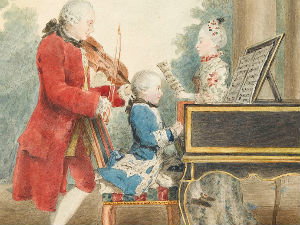
Johannes Chrysostomos Wolfgangus Theophilus Mozart.
Wolfgang Amadeus Mozart was born on January 27, 1756 in Salzburg. He comes from a family of successful musicians. His father was Leopold Mozart, who worked as a musician for the Prince of the Archbishop of Salzburg. He was also a teacher and composed to order. Wolfgang's mother's name was Anna Maria Pertl. They had a total of seven children, but at that time there was a very high infant mortality rate and only Wolfgang and his older sister Maria Anna survived.
https://www.youtube.com/watch?v=G6hVlTa7v3c
Leopold started teaching his son when he was only a few years old. He neglects his job in order to dedicate himself to his son and his education. Mozart already knew how to play the piano at the age of three, and his father taught him to play the violin as well. He quickly developed the skill of playing all the musical directions of that time. Wolfgang soon exceeded his father's expectations and at the age of five he wrote his first compositions and showed incredible skills on clarinet and violin.
In 1762, Leopold took Wolfgang and Maria Anna, called Nanerl, to the court in Munich. Mozart is presented as a "miracle child". He was only six years old then. After that, they performed at the court in Paris, London and other European cities. The journeys were long and Wolfgang became seriously ill a couple of times. Leopold was more worried about the wealth that could escape him than the health of his son.
https://www.youtube.com/watch?v=HMjQygwPI1c
Until the age of 20, he had the opportunity to work on various musical genres, composing symphonies, string quartets, sonatas and several operas. He developed a passion for violin concertos, but wrote only five, the most famous of which are no. 3 and no. 5. He turned to writing piano concertos in 1776 and finished with piano concerto no. 9.
Despite the success of his compositions, Mozart became dissatisfied with his position as assistant conductor, which was provided to him by the archbishop. He was very ambitious and thought he could achieve more elsewhere.
https://www.youtube.com/watch?v=EaqYGdC_xSI
In August 1777, Mozart set out on a journey in search of better employment. He visited Mannheim, Paris and Munich. He was accompanied on the trip by his mother, who fell ill during the trip and died on July 3, 1778. After hearing the news of his wife's death, Leopold secured a place for his son at the court in Salzburg, which Mozart accepted. During that period, he composed many church works, including the "Coronation Mass". Mozart had various disagreements at court and in 1781 he was fired and went to Vienna, where he remained for the rest of his life.
https://www.youtube.com/watch?v=Zi8vJ_lMxQI
In Rome, they visited the Pope and experienced great success. Mozart was awarded the Order of the Golden Spur of the first order, thanks to which he was able to use the title of knight. By a play of fate, his patron was a certain Count Coloredo, who would become the next Archbishop of Salzburg.
Mozart's work consists of 17 operas, more than 50 symphonies, a large number of instrumental compositions, such as cassations, divertimento, serenades, quartets, trios, more than 30 sonatas for piano and violin, 26 piano sonatas, 7 violin and 27 piano concertos. and 11 for other instruments.
Wolfgang Amadeus Mozart has composed over six hundred works that cover all genres of classical music from the time of its creation, the most famous of which are:
Symphonies: "Paris", "Hafner", "Linz", "Prague", "Jupiter" and "Symphony No. 40"
"Piano Concerto No. 21", "Piano Concerto No. 25" and "Piano Concerto No. 26", "Violin Concerto No. 3" and "Violin Concerto No. 5", "Turkish March", "Haydn Quartets", "Little Night Music", "," Figaro's Marriage "," Don Giovanni "," That's How They Do Everything "and" The Magic Flute "," Coronation Mass "and" Great Mass ", as well as" Requiem "
which is treated as an unfinished work.
https://www.youtube.com/watch?v=ON9mj7pxPZo
Against the will of his parents, Mozart married Constance Weber in 1782, with whom he had six children, of whom only two survived. His life was filled with financial difficulties because he was often not paid, and he led an extravagant lifestyle.
Mozart died at the age of less than 36, on December 5, 1791, in Vienna in terrible misery.
Robots vs humans?!
From the 16th-century Jewish story of the Golem, a clay man revived by Rabbi Loev ben Bezalel to Faust, and Mary Shelley's Victorian story of Frankenstein, artificial people carried the biblical message of the dangers lurking in the face of excessive knowledge. The whole idea of artificial people changed with the social context.
During the nuclear paranoia of the 1950s, the robot is increasingly imagined as a superbeing that will inherit man after his extermination, and he is unavoidable in all the then popular space adventures. Meanwhile, as genetics evolve, robots mix with clones, turning into cyborgs or biorobots. Today's robot is, to be more precise, disembodied. Although two-legged androids have been in production for a long time, the modern idea of a robot is neither mechanical nor biological.
Today, robots live in the virtual world of the Internet and computer processors. Where, in fact, there are the most of them. Although automation is present today, its impact in the future will be increasing in a wider range of applications. One of the fields where robotics is expected to play a big role in the future is medicine.
Robots are expected to largely replace humans in high-risk jobs such as security and defense. Robots will be intelligent bows that will be present both in our households and in industry. They will be able to be programmed to help at home, help on farms, to work 24 hours a day in factories.
Replacing people in certain jobs will enable a person to be less exposed to a dangerous, stressful and unhealthy environment, thus reducing the risks to the person associated with the job he is doing.
One of the big problems could arise precisely because robots will replace the shell workforce on a large number of jobs, which is why we could face a large increase in the number of unemployed.
Sodium bicarbonate and glass of water every day
When it comes to the problems of the common man, baking soda combined with water works wonders.
We’ve all heard of baking soda. It is found in every household and its application is multiple. It is used in cooking as a means of raising the dough, in treatment, more precisely as a dietary supplement in therapies for various diseases, but also as a means of cleaning and maintaining space hygiene, disinfection and bleaching of clothes, etc. So, there is a wide range of effects of this magic powder called baking soda or sodium bicarbonate.
https://www.youtube.com/watch?v=8OhyICVryO0
Its application is very wide, it is used for various purposes, from the food to the pharmaceutical and chemical industries. It should certainly be used with caution and in a controlled manner when it comes to baking soda treatment, because it can disrupt the pH of the stomach in large quantities, but an excessive amount of sodium also increases blood pressure.
However, if used in the recommended doses and in a controlled manner, baking soda is an excellent ally in the fight against many diseases. There are many more benefits from it than harms. It will help us with stomach problems, intestinal fungi, weight loss, alkalization, detoxification and cleansing of the body.
It can also be used for washing fruits and vegetables, given the huge air pollution and the increasing amount of used insecticides and herbicides in agricultural production. Baking soda has found its place in the production of soft drinks, cosmetics, bakery and chemical industry, cooking, etc.
Now it should be noted that there are two types of baking soda, medical baking soda and plain baking soda
The term medical baking soda is used for refined, finer soda, which is obtained by the same principle and the same procedure as the one that can be bought in all stores. The only difference is in the fineness and purity of the same, more precisely, it is cleaned of aluminum.
Stomach problems (excess stomach acid, bloating, indigestion…)
Dermatological problems (regeneration of skin and mucous membranes, healing of wounds and burns)
Fungal diseases of the skin and intestines (candidiasis)
For bowel cleansing (laxative)
Alkalization and detoxification of the organism
Heart and blood vessel disease
For sore throat (rinsing and gargling)
Gum disease
Oral infections
These are some of the diseases that with the help of baking soda we can cure or cure bigger problems. But you should still consult a doctor if these problems are bigger.
Jadav Molai Payeng, a man who planted a forest of 550 hectares with his bare hands
The forest is named "Molai forest", after the man who created it and lived in it for more than 40 years. Jadav Molai Payeng has dedicated his entire life to forest maintenance and development. Accepting a life of isolation, he began living alone as a teenager, spending days intending to help plants grow.
In the past 70 years, the island of Majuli has shrunk by more than half, which is why there are doubts that it will be completely submerged in the next 20 years.
The island is under constant threat due to extensive soil erosion, and while the Indian authorities are trying to figure out what to do to prolong its life, this man is doing something concrete.
https://www.youtube.com/watch?v=HkZDSqyE1do&feature=emb_logo
The great flood of 1965 completely destroyed the hell on Brahmaputra where the Pajeng family lived. It was the first traumatic experience for little Jadav, and the trauma was repeated when the great flood of 1979 hit Assam again.
Then Jadav came across a large number of snakes that died from too much heat after the flood threw them out on a sandbar on which there were no trees, and then he decided that his life mission would be to save Majuli from erosion by planting trees.
He planted each seed with his bare hands. He watered in the morning and in the evening. Despite the pain, slowness and loneliness, he never stopped planting.
Today, this "barren" landscape has about 550 hectares of forest, home to several thousand species of trees and an incredible diversity of wildlife - birds, deer, monkeys, tigers, rhinos and elephants.
**Thanks Man.**
Mikelanđelo di Lodoviko Buonaroti Simoni.
His path to art was indicated when he was 6 years old, after the death of his mother Francesca di Neri Miniato del Serre. He spent the next 4 years with a family of stonemasons, who had been hauling marble blocks for palaces in Florence for generations. He created Adam, on canvas. He revived David with his skillful stonemasonry talent. He was the chief architect of St. Peter's Basilica in Rome. He had an impressive influence on the development of further European art and left an indelible mark in world and European creativity. Michelangelo Buonarroti. His life path was very interesting.
He gained the protection of Lorenzo De Medici, and his calm hand and innate talent aroused the envy of other students, so his young rival, named Pietro Torrigiano, broke his nose in a fit of rage and envy and permanently deformed it. Torrigiano later boasted of this procedure, proud because, as he emphasized, Michelangelo would carry the deformity he had caused him for the rest of his life.
There is an anecdote according to which Lorenzo de 'Medici persuaded Michelangelo to bury his work, which he named as a statue of "sleeping Cupid", which he made as a replica of a famous Roman sculpture, and that after some time, supposedly surprised by the excavation, he would not li raised her value. Michelangelo, who was otherwise prone to lying, agreed. The statue was buried in such a way that Cardinal Rafaelo Riario enthusiastically bought it for big money, convinced that he had bought an old excavation of inestimable importance. He was the first artist of that time to publish his own autobiography.
`Madonna della scala`
His contemporaries who created at the same time as he did not love him for understandable reasons, but because of that the people loved him, so he and his work were recognized during his lifetime.
`Tondo Doni`
He made works of art for a total of 9 heads of the Roman Catholic Church. Popes who commissioned works of art from him and enjoyed his painting and sculpting skills ranged from Julius II to Pius
The statue of Jesus when Mary holds it in her hands, that is, the famous "Rondanini Pieta", is the only work that Michelangelo signed as the author. On that occasion, he wrote: "Michaelangelus Bonarotus Florentinus faciebat", which means: "Michelangelo Buonarroti from Florence made this".
The painting of the vault of the Sistine Chapel, named after Pope Sixtus IV, who had it built, was commissioned by Pope Julius II and carried out by Michelangelo, from May 10, 1458, to October 31, 1512.
The dimensions of this fresco are incredible, and "The Creation of Adam" is one of the most recognizable paintings from this work. Although it is the fourth in a row, it was completed among the last, and even today it causes great public attention.
This masterpiece is still a topic of analysis today. Art historians as well as people who are experts in the field of anatomy have their own opinion about this fresco.
Some experts in the field of anatomy believe that the work contains allusions to the anatomy of the human body and that the right side of the image is actually an anatomically accurate image of the human brain. It is also believed that one strange, upright crease in the uniform of the figure of God actually represents the spinal cord, while the other, in the shape of the letter "Y", hides an illustration of the optic nerve.
Michelangelo left the world many masterpieces such as:
`Pieta`
`The Last Judgment`
`David`
`Moses`
`Bahus-Bacco`
And so Michelangelo, who saw himself as a sculptor, left a lasting mark as a painter and ended his career as an architect.
Paso Doble, a struggle of rhythm and movement.
Dance existed at all levels of development of civilization and cultural life of the human community. Since in dance the instrument of artistic expression is one's own body, it has always been available to all social strata throughout its history. It was like that, it is like that today, and it will be like that in the future as well.
I am a fan of Latin dances. Somehow my favorite is Paso Doble.
Paso Doble is a lively theatrical Spanish dance. Paso Dobl literally means "two steps", so he always dances in double beat. The dance is based on the concept of bullfighting. Scenes from bullfights are used, as well as music played during fights during the matador's entry into the arena (paseo) or during passages just before the murder (faena). The man plays the matador, and the woman is sometimes his cloak, and sometimes the bull himself.
https://www.youtube.com/watch?v=Vj5tXdWEb5o
This is a dance where a man really has his own show. He dances proudly, his back straight, his shoulders back, and his head raised. His steps are sharp, progressive and are performed on the principle of heel-foot, in the form of a march. The frame is wider, the posture is firmer, and unlike most Latino dances there is very little or no hip movement.
https://www.youtube.com/watch?v=7ONCE5aGfaQ
A woman plays a less important role - she mostly symbolizes his cloak. She moves fluttering on the podium together with the man, around the imagined bull, and their movements are imbued with elements of Flamenco and remind of a fight in an arena. The dance culminates when a man kills a bull - it is one of the most dramatic dances you will ever see.
https://www.youtube.com/watch?v=saDrTLStPvg
Paso Doble is a very choreographic dance, which is mostly danced at competitions, rather than as a social dance. The music originated from Espano Cani (Spanish gypsy dance), who has breaks in specific places during the song.
https://www.youtube.com/watch?v=ait7Bgn0w3Y
He got his current form in France, and he was included among the competitive dances in 1959.
The music is magnificent, energetic, sharp, upbeat, it consists of a marching introductory part reminiscent of Flamenco rhythm, and two main parts-phrases, with precisely marked highlights, to which the choreography adapts.

The genetic point of depravity.
As everywhere in Europe in the past, royal property was inherited. If one of the members of the royal family were to be married to someone "from the side", in the event of a split, a huge territory would have to be divided, which often included entire states and peoples.
The simple solution of the Habsburg dynasty for this "problem" was to marry each other!
During their reign, the Habsburgs made at least 80 percent of marriages with close blood relatives. What was not known at that time was the fact that the marriage of close relatives could have consequences for the descendants. The dynasty became known for a high percentage of stillborn children, and those who would have survived were not entirely "normal."
One of the deformities that was the most common among the descendants of cousins became known as the "Habsburg jaw", and all the horror of crossing close relatives can be seen today in the portraits of members of this dynasty.
The circuit of genetic mutations eventually broke on this ruler - King Carlos II of Spain.
In Spanish history, Carlos II is known as the "Enchanters". He simply had so many psychophysical disorders that the people were convinced that some supernatural forces were at work. Namely, Carlos's branch of the Habsburg lineage had read through cases when sisters gave birth to children from marriages with their uncles. Carlos' mother was the niece and wife of his father and daughter Maria Anne of Spain and Emperor Ferdinand III. Thus, Maria Ana was Carlos's aunt and grandmother at the same time, and his mother was his uncle's sister at the same time.
In 1679, eighteen year old Carlos married his cousin Marie Louise of Orleans. They had no children because Carlos was impotent and infertile, but the medicine of that time, according to the established custom, blamed the queen exclusively for the lack of descendants. Maria Louise became depressed and died at the age of 27 after ten years of marriage.
Due to the necessity to get an heir the following year, Carlos married another cousin, Maria Anna of Neuburg. There were no children in this marriage either.
The practice of incestoid marriages took its greatest toll, and the rule of the Habsburg dynasty in Spain was extinguished by the death of Carlos II.
How did the Stockholm Syndrome come about !?
Stockholm syndrome is a psychological reaction that is sometimes seen in hostages, who show signs of loyalty to the kidnappers, regardless of the danger they are exposed to. The syndrome was named after the "Credit Bank" robbery on Normalmstorg Square in Stockholm, where the robbers held bank workers hostage from August 23 to 28, 1973. After his release from prison, Jan-Erik Olson tried to rob a bank, and after the police were called, the robbery turned into a hostage crisis, during which Olson took four hostages. One of his requests, out of a total of six, was for his friend Clark Olofson to join him. After five days of negotiations, the police threw tear gas into the bank and after half an hour Olson and Olofson surrendered. The hostages did not suffer serious injuries, and later claimed that they were more afraid of police actions than robbers. It was obvious that they sympathized with their captors. The term "Stockholm syndrome" was coined by Swedish criminologist and psychiatrist Nils Bejerot, who helped the police during the robbery.
The hostages became emotionally attached to the kidnappers, so they justified their actions after they were released. They refused to testify against the kidnappers, they collected money for their defense, and a woman who was among the hostages married one of the robbers. Later, after the trial, the hostages were reluctant to talk about the abduction,
Stockholm syndrome is a defense mechanism that is triggered in many prisoners. When we are at someone’s mercy or disfavor, we try to please him for the sake of survival. Our psyche adjusts so that we begin to sympathize with the torturer, and even to love him. This happens not only in the case of kidnappings, but also in any form of violence, especially domestic violence.
There are many examples of Stockholm Syndrome. One of them is the case of Brian Mitchell.
Namely, in June 2002, the mentally ill Brian Mitchell abducted 14-year-old Elizabeth Smart from her bedroom in Salt Lake City while her parents and brothers were sleeping.
He held her captive for nine months, allegedly raped her several times and severely physically abused her. However, after several months of forced detention, Elizabeth reportedly stayed with her abductor even though she was not physically forced and could leave.
Only three days after she was abducted, she even heard her uncle calling her from close range, the basement where she was, but she did not want to answer him. She was found in good physical condition, in a basement not far from her parents' house.
What is interesting is that Elizabeth never told what was happening and refused to speak out against the kidnappers despite her family’s angry demands.
Infographics attract attention.
Infographics are a visual story. It tells the viewer the complete story using text, images and a limited amount of highlighted words. The goal of great infographics is not just to be seen and shared further, but to teach or connect with the viewer in some way.
The fact is that about 65% of people learn visually. Our brains contain such connections that they process information faster when they are in a visual format, and not just in the form of text. Over half of our brain is especially dedicated to processing visual information!
Many times it reacts (clicks) more to a website that contains images than to a site with only text.
People respond better to visual information than to plain text.
When information is processed visually, 20% of the information is retained as opposed to a retention rate of 10% from the text alone.
We know that graphics attract attention and are easy to understand, but they are also easier to remember. This is due to the image superiority effect. The superiority of an image means that people are more likely to remember a concept when it is presented as an image rather than as a word.
According to a **Kissmetrics** survey, photos have 53% more likes, 104% more comments and 84% more clicks than other Facebook posts. Tweets on Twitter that contain photos are 35% more retweeted than tweets without pictures. On platforms like Pinterest, Instagram and Tumbir, there are a lot of accounts designed specifically for infographics.
In order for your infographic to be effective, it should be relevant, clear and have a clear design. In addition to free templates or ones you can buy online today, you can also master Adobe Illustrator for vector drawing of infographic elements.
 @BettyBoop