 @Ben_reader101
part 2: easy korean lesson------this/that/over there
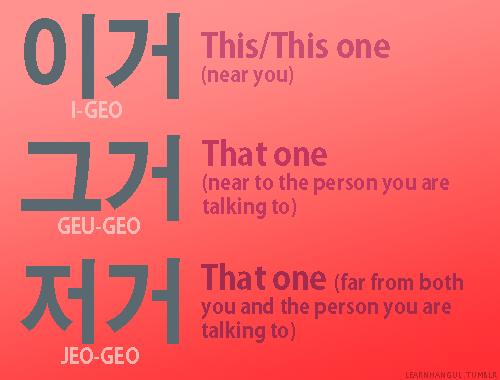
이 (this), 저 (that), 그 (that) are used to indicate a person or an object. 이 is used to refer to a person or an object that is close to the speaker. 저 is used to refer to a person or an object that is not close to either the speaker or the listener. 그 is used to refer to a person or an object that is not close to the speaker but is close to the listener. Note that 그 can also be used to indicate a person or an object previously mentioned that is not in the presence of either the speaker or the listener at the time of speaking. For example: A: 투안 씨가 한국에 있어요? B: 아니요, 그분은 지금 베트남에 있어요. A: Is Tuan in Korea? B: No. That person is currently in Vietnam 이, 저, 그 are usually combined with 것 (which means ‘thing’) to form the pronouns 이것, 저것, and 그것. 저것이 뭐예요 ? What is that (thing)? When 이것, 저것, and 그것 are used with the subject marker 이, they are often shortened to 이게, 저게, and 그게. When 이것, 저것, and 그것 are used with the object marker 을, they are often shortened to 이걸, 저걸, and 그걸. Similarly, when 이것, 저것, and 그것 are used with the topic marker 은, they are often shortened to 이건, 저건, and 그건. More examples: 이 사과 = This apple 그 사과 = That apple 저 사과 = That apple over there 이것은 무엇이에요 ? = 이건 무엇이에요 ? = What is this ?
No comments yet