 @BOMBERuss
more from that month
@BOMBERuss
more from that month
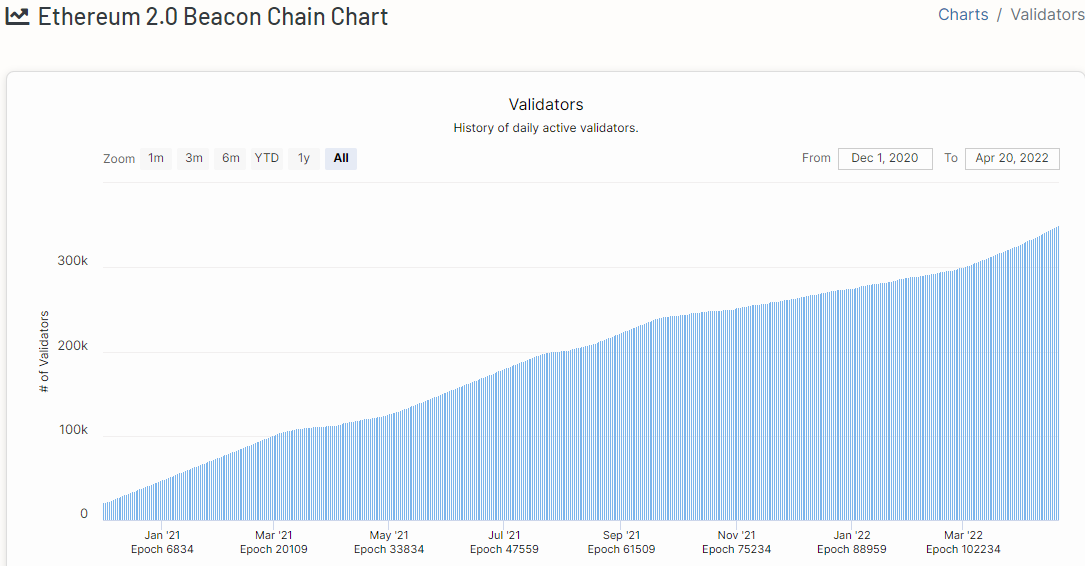
The number of validators of the #Ethereum signal chain (Beacon Chain) has increased by almost 50,000 in a month and a half, reaching 349,813 addresses. 11.6 million ETH is blocked in the Ethereum 2.0 deposit smart contract. The community of Ethereum users and developers is looking forward to the transition of the Ethereum blockchain from Proof-of-Work (#PoW) consensus to Proof-of-Stake (#PoS). This transition is already being implemented, and a parallel network is currently operating, so far consisting of the Beacon Chain signal chain used to deploy Ethereum 2.0. Beacon Chain is not capable of processing smart contracts, however, this chain allows you to coordinate an expanded network of shards and stakes for Ethereum 2.0. The signal chain was created on December 1, 2020, and since then pore validators maintain its security. According to the data presented on the Beacon Chain website, since the beginning of March, the number of validators of this network has increased by about 50,000. On March 1, the number of validators of Ethereum 2.0 exceeded 300,000, and as of April 20, the number of validators has already reached 349,813 addresses on the epoch 113512. According to the Ethereum blockchain reviewer #Etherscan, 11.6 million #ETH worth about $35.9 billion are blocked in the Ethereum 2.0 smart contract. Deposits are made daily, on a regular basis, in the amount of 32 ETH per address. Currently, the impact of the Beacon Chain on the current network is not felt, since it is expected that Ethereum will approach PoS gradually until PoW "runs out". Until then, the chain using the PoW consensus method remains dominant, so the problem of high fees and slow transactions still persists. Recently, the Ethereum Foundation published a report on the number of ethers stored on its balance sheet, and how much #money it spends on research related to updates to the main Ethereum #network. #BeaconChain #CryptoCurrency #Ethereum2 #smartcontract
No comments yet