 @BOMBERuss
more from that month
@BOMBERuss
more from that month
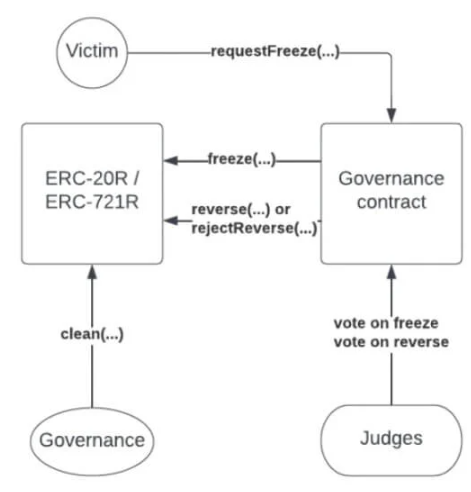
The #Ethereum network presents the #ERC20R and #ERC721R token standards with the ability to return transactions. The loss of Ethereum tokens and any other cryptocurrencies, regardless of the reason - whether it is theft or a lost seed phrase — is an irrevocable phenomenon. It is very rare for cybersecurity experts to recover a private key, while attackers, for obvious reasons, will not return the stolen crypt. However, the situation may change thanks to the work of researchers from the Stanford Institute Kylie Wang, Qingchen Wang and Dan Boneh. The day before, they proposed to create new Ethereum-based token standards called ERC20R and ERC721R. These are extended versions of the ERC-20 and ERC-721 standards with the ability to #return transactions. ERC20R and ERC721R combine the smart contracts of the #token itself and its management. According to Decrypt sources, the managing smart contract is controlled by a "decentralized judicial system" in which a quorum of judges votes to freeze and cancel malicious transactions. For example, a victim whose funds were stolen can submit a request for freezing to the smart contract manager, providing the relevant evidence. When submitting such a request, the victim must pay a "trial" commission so that judges have an economic incentive to engage in their own activities. It is assumed that for an additional fee, it would also be possible to increase the priority of consideration of cases, similar to an increase in commissions for a place in the queue for confirming a transaction in various cryptocurrencies with a mempool, that is, a queue of unconfirmed transactions. If the majority of the quorum votes in favor of the victim, the funds may be frozen, which will trigger a lawsuit. During it, both parties — the victim and the hacker — can present their evidence to the decentralized judges, who will vote for the result again. According to the results of the vote, the funds are either returned to the victim, or the request is rejected. In theory, this idea can help with the return of funds after hacker attacks, but it has faced criticism from many crypto enthusiasts. The problem here is that the reverse of transactions goes against the main principles of the #blockchain. It is impossible to make a refund, since the information in the blockchain, in principle, cannot be changed. Moreover, refunds can be arranged in other ways, representatives of the Argent project noted on #Twitter. Here's a quote. This is an interesting idea, but it can be implemented in other ways that allow the crypt to remain truly free from restrictions. We can do things like fraud monitoring, distributing multi-signature wallets to everyone, or social recovery. Another important point is that ERC20R and ERC721R smart contracts are difficult to integrate into the existing system of decentralized finance. Such tokens can be changed to ordinary ones, which in theory negates their features, If this function is not implemented, then tokens with a return function will be suitable only for transferring value — and this is unlikely to attract the attention of many users. In addition, the inability to interact with the world of #DeFi is also unlikely to benefit the reputation of the novelty. #CryptoCurrency #ETH #SmartContract
No comments yet