 @BOMBERuss
more from that month
@BOMBERuss
more from that month
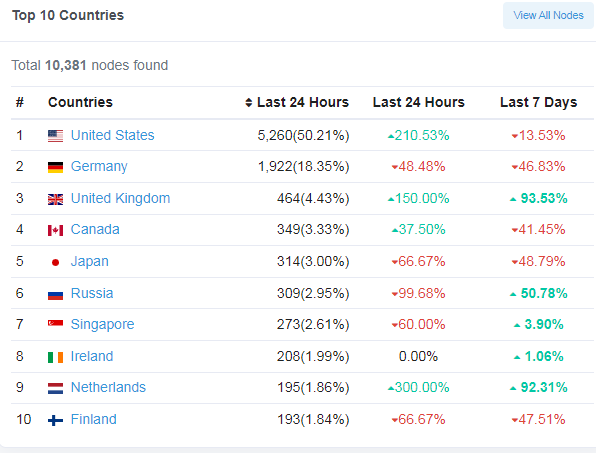
The US Treasury Department may be authorized to monitor and regulate #Ethereum 2.0 transactions. The US Treasury Department may regulate Ethereum 2.0 transactions. This option cannot be excluded. As you know, in September, the Ethereum #blockchain will switch to the PoS algorithm. Earlier, the developers came to an agreement that the Bellatrix upgrade preceding the "merger" will take place at the epoch 144896, on September 6. Activation of The Merge will occur with the Paris update when the Cumulative Network Complexity Index (#TTD) reaches 58750000000000000000000. This will most likely happen on September 15. Investors are already calculating the profit from this event, judging by the huge number of open Call options, meaning a bet on the future growth of the value of ETH. However, there is a possibility that things will not go as investors expect. In particular, the founder of the #Crypto Pragmatist portal, Jack Nywald, after analyzing the nodes of validators, believes that everything can happen according to an extremely undesirable scenario for investors. And the US Treasury Department will play a huge role in this. Validators will replace the network of PoW miners after the transition to Ethereum 2.0. Validators have been working since November 2021, any of them could raise a node, having the appropriate capabilities and 32 ETH placed on a deposit contract in the Beacon Chain network. Unlike Ethereum, which has 2,843 nodes, Ethereum 2.0 will become more decentralized. Validators have already deployed 4688 nodes. However, their geographical location is of concern. Jack Newold drew attention to the presence of 27.21% of PoS nodes in the USA. Together with Europe, developed countries account for 81% of network control. All American validators have been verified by OFAC. This department is part of the U.S. Department of Defense and is engaged in monitoring compliance with sanctions. According to Nyuod, the launch of Ethereum 2.0 will lead to severe financial censorship on the network. Validators will reorganize the blocks, blocking all wallet transactions according to OFAC blacklists. Most likely, our European colleagues will also comply with the sanctions regime. The Ethereum development team is aware of this problem, but has not yet taken any action. And ETH may face an extremely rapid sell-off as soon as the first acts of censorship imposed by the US Department of State are publicly announced. #Bitcoin is much more secure in this regard. Unlike Ethereum 2.0, the Bitcoin network is much more resistant to #OFAC. Despite the move of miners to the New World, when mining was banned in #China, 13239 Bitcoin blockchain nodes are more widely distributed in different countries. The network is located in Asia, South America, despite the large number of nodes in the #USA and EU countries. Yes, Bitcoin does not support the launch of smart contracts, but in this regard, Ethereum has a large number of competitors operating on the #PoS algorithm. #CryptoCurrency
No comments yet