 @BOMBERuss
more from that month
@BOMBERuss
more from that month
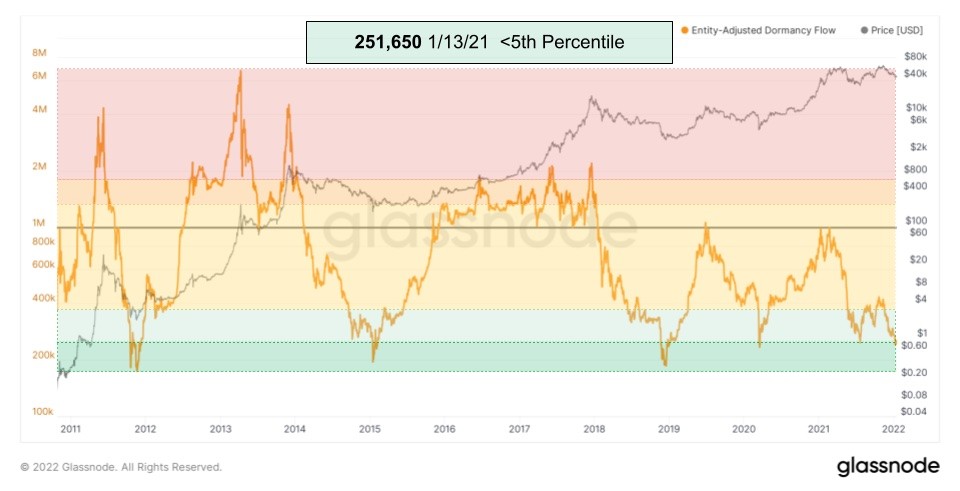
This week, Dormancy Flow, a key on-chain metric, signaled the potential formation of a price bottom for bitcoin. The Dormancy Flow coefficient, developed by David Puell, is the ratio of market capitalization to the average annual value of the dormancy coefficient in dollar terms. The dormancy value itself is defined as the ratio of the number of destroyed coin days (CDD) to the total volume of on-chain transfers (adjusted for change). Lower values of dormancy, or CDD, in comparison with the total volume of on-chain transfers indicate less activity of more "old" coins, that is, relatively low activity of hodlers. Higher dormancy values indicate that more "old" coins have started moving or have been spent on the blockchain. To obtain the average annual cost of dormancy, the coefficient value for each day is multiplied by the price in USD, then a 365-day moving average is taken. When the market capitalization in comparison with the higher average annual value of dormancy (expressing the level of spending of older coins) is at historical lows, the Dormancy Flow coefficient signals the potential formation of the bottom against the background of complete market capitulation. Historically, this has meant great buying opportunities for the long term. As of January 14, the Dormancy Flow coefficient is below the fifth percentile in comparison with its own historical values; it has reached such a low level only six times in the history of Bitcoin.
No comments yet