 @Arif.12
more from that month
@Arif.12
more from that month
"History of The Photography"
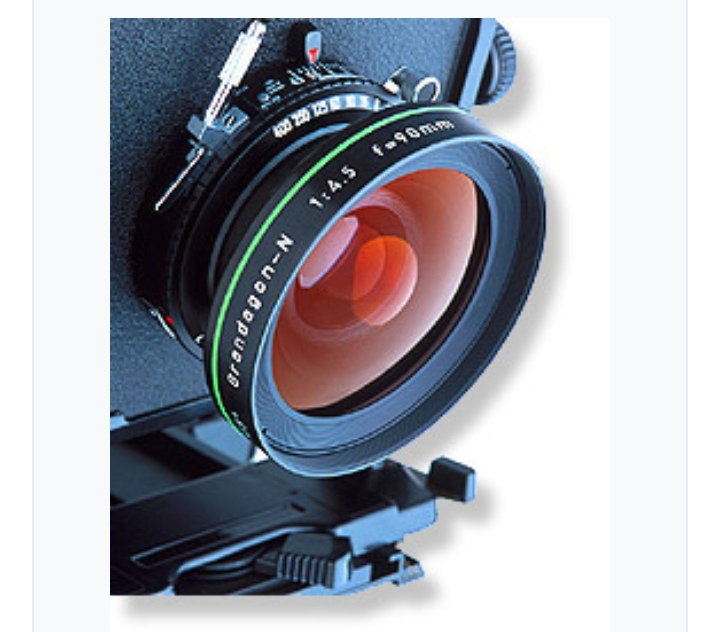
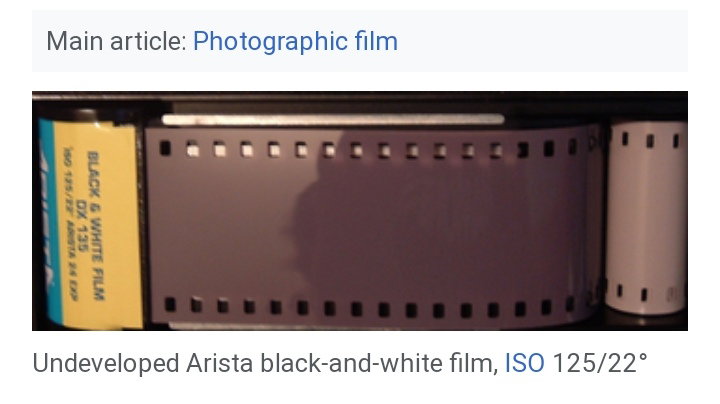
Photography is the result of combining several technical discoveries, relating to seeing an image and capturing the image. The discovery of the camera obscura ("dark chamber" in Latin) that provides an image of a scene dates back to ancient China. Greek mathematicians Aristotle and Euclid independently described a camera obscura in the 5th and 4th centuries BCE. In the 6th century CE, Byzantine mathematician Anthemius of Tralles used a type of camera obscura in his experiments. https://en.m.wikipedia.org/wiki/Camera_obscura https://en.m.wikipedia.org/wiki/Latin https://en.m.wikipedia.org/wiki/History_of_Science_and_Technology_in_China https://en.m.wikipedia.org/wiki/Aristotle https://en.m.wikipedia.org/wiki/Euclid https://en.m.wikipedia.org/wiki/Anthemius_of_Tralles The Arab physicist Ibn al-Haytham (Alhazen) (965–1040) also invented a camera obscura as well as the first true pinhole camera. The invention of the camera has been traced back to the work of Ibn al-Haytham.While the effects of a single light passing through a pinhole had been described earlier, Ibn al-Haytham gave the first correct analysis of the camera obscura,including the first geometrical and quantitative descriptions of the phenomenon, and was the first to use a screen in a dark room so that an image from one side of a hole in the surface could be projected onto a screen on the other side. He also first understood the relationship between the focal point and the pinhole, and performed early experiments with afterimages, laying the foundations for the invention of photography in the 19th century. https://en.m.wikipedia.org/wiki/Physics_in_the_medieval_Islamic_world https://en.m.wikipedia.org/wiki/Ibn_al-Haytham https://en.m.wikipedia.org/wiki/Pinhole_camera https://en.m.wikipedia.org/wiki/Focus_(optics) https://en.m.wikipedia.org/wiki/Afterimage
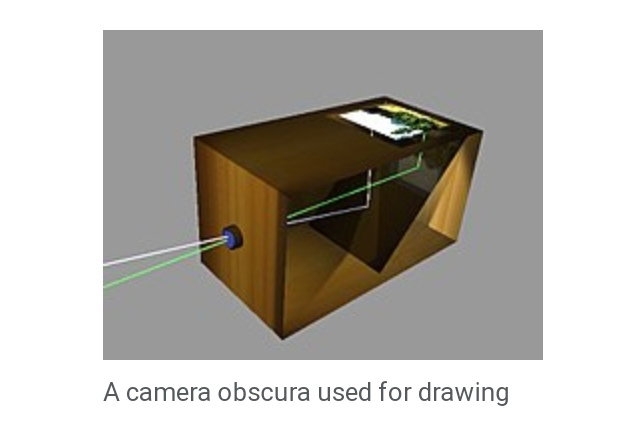
Leonardo da Vinci mentions natural camera obscura that are formed by dark caves on the edge of a sunlit valley. A hole in the cave wall will act as a pinhole camera and project a laterally reversed, upside down image on a piece of paper. Renaissance painters used the camera obscura which, in fact, gives the optical rendering in color that dominates Western Art. It is a box with a hole in it which allows light to go through and create an image onto the piece of paper. https://en.m.wikipedia.org/wiki/Leonardo_da_Vinci https://en.m.wikipedia.org/wiki/Renaissance The birth of photography was then concerned with inventing means to capture and keep the image produced by the camera obscura. Albertus Magnus (1193–1280) discovered silver nitrate,and Georg Fabricius (1516–1571) discovered silver chloride,and the techniques described in Ibn al-Haytham's Book of Optics are capable of producing primitive photographs using medieval materials. https://en.m.wikipedia.org/wiki/Albertus_Magnus https://en.m.wikipedia.org/wiki/Silver_nitrate https://en.m.wikipedia.org/wiki/Georg_Fabricius https://en.m.wikipedia.org/wiki/Silver_chloride https://en.m.wikipedia.org/wiki/Ibn_al-Haytham https://en.m.wikipedia.org/wiki/Book_of_Optics
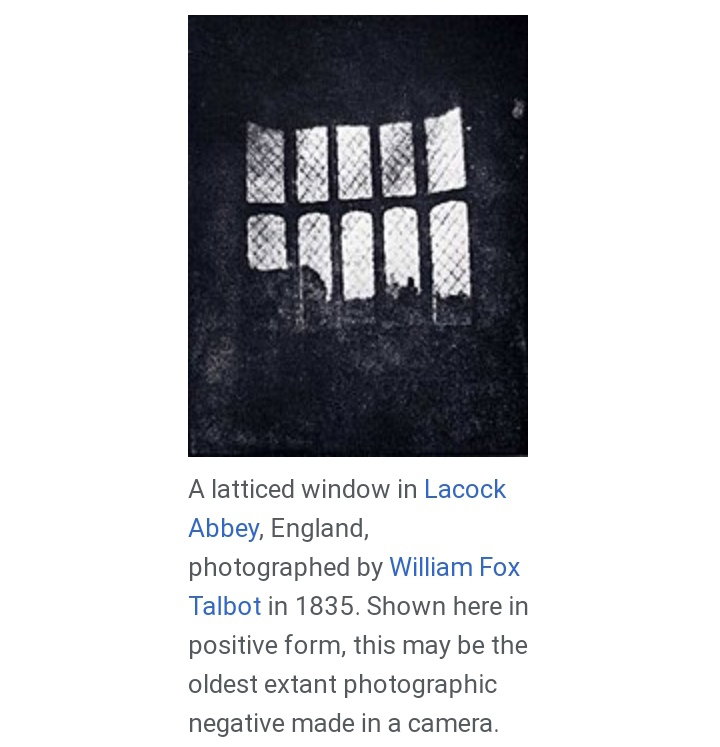
Daniele Barbaro described a diaphragm in 1566.Wilhelm Homberg described how light darkened some chemicals (photochemical effect) in 1694.[26] The fiction book *Giphantie*, published in 1760, by French author Tiphaigne de la Roche, described what can be interpreted as photography. https://en.m.wikipedia.org/wiki/Daniele_Barbaro https://en.m.wikipedia.org/wiki/Diaphragm_(optics) https://en.m.wikipedia.org/wiki/Wilhelm_Homberg https://en.m.wikipedia.org/wiki/Photography#cite_note-26 https://en.m.wikipedia.org/wiki/Giphantie https://en.m.wikipedia.org/wiki/Tiphaigne_de_la_Roche
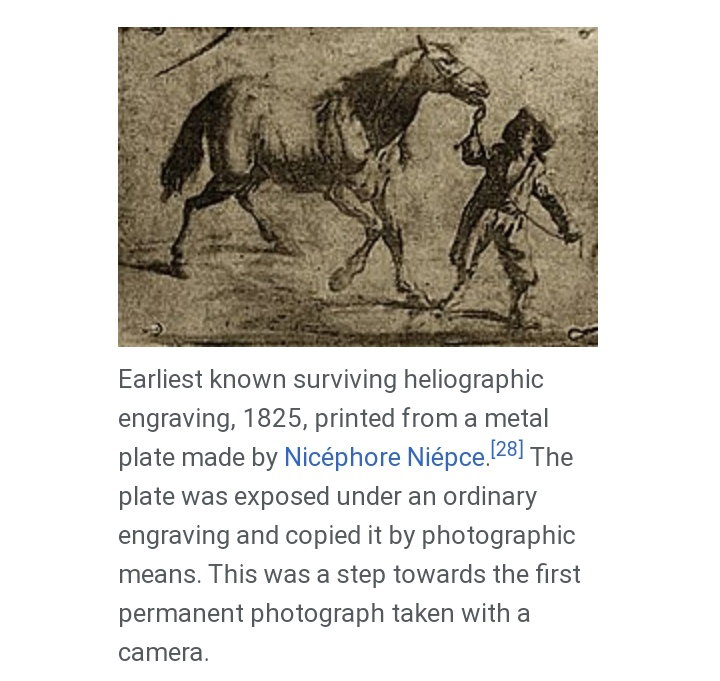
Around the year 1800, British inventor Thomas Wedgwood made the first known attempt to capture the image in a camera obscura by means of a light-sensitive substance. He used paper or white leather treated with silver nitrate. Although he succeeded in capturing the shadows of objects placed on the surface in direct sunlight, and even made shadow copies of paintings on glass, it was reported in 1802 that "the images formed by means of a camera obscura have been found too faint to produce, in any moderate time, an effect upon the nitrate of silver." The shadow images eventually darkened all over. https://en.m.wikipedia.org/wiki/United_Kingdom_of_Great_Britain_and_Ireland https://en.m.wikipedia.org/wiki/Thomas_Wedgwood_(photographer) https://en.m.wikipedia.org/wiki/Silver_nitrate
Like,Comment with upvote Subscribe @Arif.12
2 comments
Your article is very good & we learn something special😍😍😍
Thanks my soulmate. Stay with me hole life..❤🙄