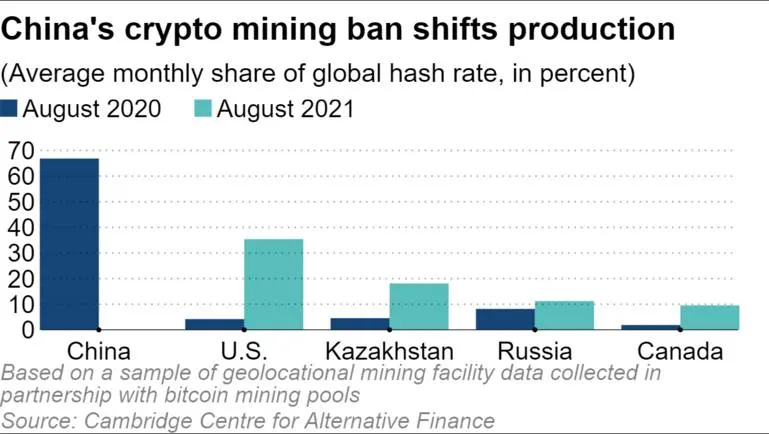
Kazakhstan is having problem coping with the surge in cryptocurrency mining as it's causing electricity shortages in energy-rich Kazakhstan. This might driving the country to consider nuclear power. Since China moved to shut down Bitcoin mining in May, waves of digital currency miners have migrated to Kazakhstan, propelling the country to second place behind the U.S. in global cryptocurrency production. Kazakhstan's share of the world's hash rate has increased to 18.1%, according to the latest data from the Cambridge Centre for Alternative Finance. That is a 4x rise from the previous year. This was partly by design: The country created a mining-friendly environment by establishing a legal framework for the industry in July 2020, and is keen to reap the financial benefits. The legislation coupled with an excess of energy made Kazakhstan a prime destination for companies relocating from China. The problem is that cryptocurrency mining sucks up enormous amounts of power. In a normal year, energy consumption grows between 1% and 2% in Kazakhstan. But so far this year, there has been "abnormal growth" of around 8%, or around 1,000 to 1,200 megawatts, according to Murat Zhurebekov, the country's first deputy energy minister. The questions is how much can the country actually benefiting in the long run to have the crypto mining industry in the country? If they build the infrastructure for crypto, it can also be used to fuel the rest of the country and might introduce new benefits. Kazakhstan should bet on crypto in my opinion, just like El Salvador is doing. #Bitcoin #Kazakhstan

2 comments
I am assuming that Kazakhstan's excess of energy came from natural gas reserves? In which case a move to nuclear might be more sustainable - as well as better environmentally
I also assume that Kazakhstan has mostly fossile fuels in their energy mix. So hopefully they can use some of the profits from these companies to transform their energy mix to a greener one.