The Other Side of Burnout: When is "Smart Quitting" the Optimal Solution?
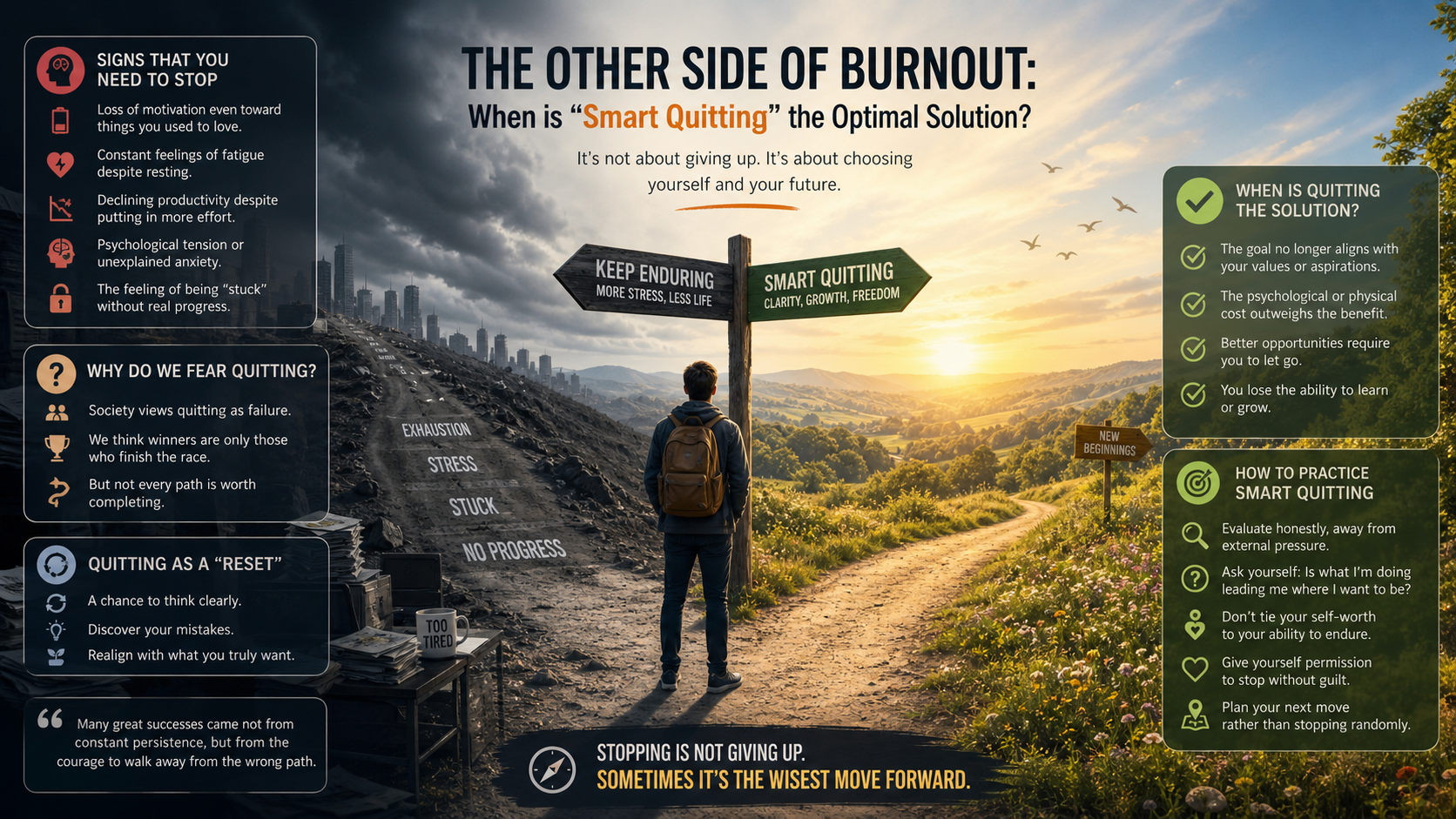
In a world that glorifies constant productivity and celebrates those who "never stop," burnout has become an unspoken badge of honor. Every day, we are pushed to exceed our limits, resist fatigue, and persist regardless of the circumstances. But have you ever wondered: Could stopping—or even quitting—sometimes be the wisest decision? Burnout is not just physical exhaustion; it is a complex state that encompasses the mind and emotions. When you reach a stage where every step forward requires double the effort and your passion is gradually eroding, this isn't a sign of weakness. Rather, it is a clear signal from within that something needs re-evaluation. What is Smart Quitting? Smart quitting doesn’t mean giving up on your dreams or failing. Instead, it is the ability to distinguish between productive persistence and destructive persistence. It is recognizing when continuing is merely a futile drain of energy and choosing to retreat as a strategic move, not an escape. Many confuse blind endurance with strength. However, true strength lies in awareness: knowing when to fight and when to withdraw to rearrange your cards. Signs That You Need to Stop Admitting you are exhausted isn't easy, but there are clear indicators, including: Loss of motivation even toward things you used to love. Constant feelings of fatigue despite resting. Declining productivity despite putting in more effort. Psychological tension or unexplained anxiety. The feeling of being "stuck" without real progress. If these signs align, continuing with the same approach might be a mistake, not an act of courage. Why Do We Fear Quitting? The fear of quitting is often linked to society's view of failure. We are raised to believe that withdrawing means defeat and that winners are only those who finish the race. But this view ignores an important truth: Not every path is worth completing. Sometimes, persistence is just stubbornness, and stepping back can be the beginning of a better path. When is Quitting the Solution? Quitting becomes a smart choice when: You realize the goal no longer aligns with your values or aspirations. The psychological or physical cost outweighs the benefit. You discover better opportunities that require you to let go of what is in your hand. You lose the ability to learn or grow in your current path. In these cases, stopping is not a loss; it is a redirection of energy. Quitting as a "Reset" Instead of viewing quitting as an end, consider it a "restart." When you stop, you give yourself the chance to think clearly, discover your mistakes, and figure out what you truly want. Many great successes did not come from constant persistence, but from brave decisions to abandon the wrong paths. How to Practice Smart Quitting: Evaluate your situation honestly, away from external pressure. Ask yourself: Is what I am doing actually leading me to where I want to be? Do not tie your personal self-worth to your ability to endure. Give yourself permission to stop without feeling guilty. Plan your next move rather than stopping randomly.
No comments yet