Bitcoin and cryptocurrency Bitcoin (₿) is a decentralized digital currency that can be transferred on the peer-to-peer bitcoin network.Bitcoin transactions are verified by network nodes through cryptography and recorded in a public distributed ledger called a blockchain. The cryptocurrency was invented in 2008 by an unknown person or group of people using the name Satoshi Nakamoto.The currency began use in 2009.when its implementation was released as open-source software. Design:- 1)Units and divisibility The unit of account of the bitcoin system is the *bitcoin*. Currency codes for representing bitcoin are BTC[a] and XBT.[b][25]. Its Unicode character is ₿. One bitcoin is divisible to eight decimal places. Units for smaller amounts of bitcoin are the millibitcoin (mBTC), equal to 1⁄1000 bitcoin, and the satoshi (sat), which is the smallest possible division, and named in homage to bitcoin's creator, representing 1⁄100000000 (one hundred millionth) bitcoin. 100,000 satoshis are one mBTC. https://en.m.wikipedia.org/wiki/Unit_of_account https://en.m.wikipedia.org/wiki/Currency_code https://en.m.wikipedia.org/wiki/Bitcoin#cite_note-BTCcode-29 https://en.m.wikipedia.org/wiki/Bitcoin#cite_note-XBTcode-33 https://en.m.wikipedia.org/wiki/Bitcoin#cite_note-btcregs-34 https://en.m.wikipedia.org/wiki/Unicode 2)Blockchain. The bitcoin blockchain is a public ledger that records bitcoin transactions. It is implemented as a chain of blocks, each block containing a cryptographic hash of the previous block up to the genesis block[c] in the chain. A network of communicating nodes running bitcoin software maintains the blockchain.[30]: 215–219 Transactions of the form payer X sends Y bitcoins to payee Z are broadcast to this network using readily available software applications.
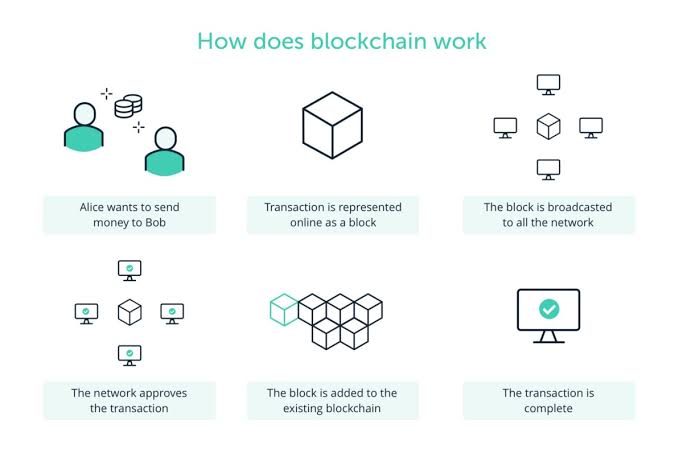
Network nodes can validate transactions, add them to their copy of the ledger, and then broadcast these ledger additions to other nodes. To achieve independent verification of the chain of ownership each network node stores its own copy of the blockchain. At varying intervals of time averaging to every 10 minutes, a new group of accepted transactions, called a block, is created, added to the blockchain, and quickly published to all nodes, without requiring central oversight. This allows bitcoin software to determine when a particular bitcoin was spent, which is needed to prevent double-spending. A conventional ledger records the transfers of actual bills or promissory notes that exist apart from it, but the blockchain is the only place that bitcoins can be said to exist in the form of unspent outputs of transactions. Individual blocks, public addresses and transactions within blocks can be examined using a blockchain explorer. 3)Transaction. Transactions are defined using a Forth-like scripting language. Transactions consist of one or more inputs and one or more outputs. When a user sends bitcoins, the user designates each address and the amount of bitcoin being sent to that address in an output. To prevent double spending, each input must refer to a previous unspent output in the blockchain. The use of multiple inputs corresponds to the use of multiple coins in a cash transaction. Since transactions can have multiple outputs, users can send bitcoins to multiple recipients in one transaction. As in a cash transaction, the sum of inputs (coins used to pay) can exceed the intended sum of payments. In such a case, an additional output is used, returning the change back to the payer.Any input satoshis not accounted for in the transaction outputs become the transaction fee.
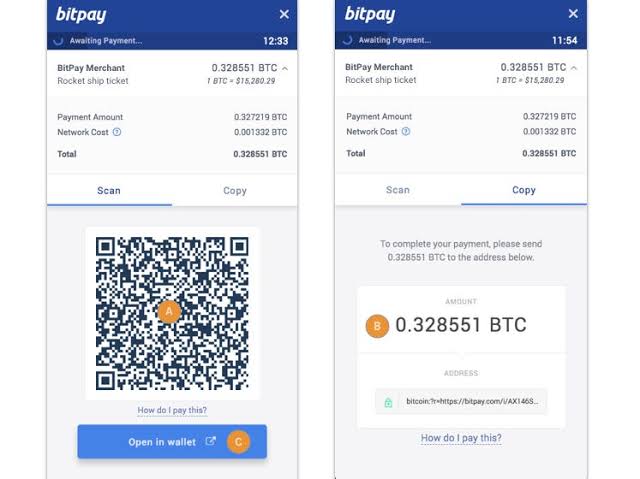
Though transaction fees are optional, miners can choose which transactions to process and prioritize those that pay higher fees.Miners may choose transactions based on the fee paid relative to their storage size, not the absolute amount of money paid as a fee. These fees are generally measured in satoshis per byte (sat/b). The size of transactions is dependent on the number of inputs used to create the transaction, and the number of outputs. The blocks in the blockchain were originally limited to 32 megabytes in size. The block size limit of one megabyte was introduced by Satoshi Nakamoto in 2010. Eventually the block size limit of one megabyte created problems for transaction processing, such as increasing transaction fees and delayed processing of transactions.Andreas Antonopoulos has stated Lightning Network is a potential scaling solution and referred to lightning as a second-layer routing network. 4)Ownership. In the blockchain, bitcoins are registered to bitcoin addresses. Creating a bitcoin address requires nothing more than picking a random valid private key and computing the corresponding bitcoin address. This computation can be done in a split second. But the reverse, computing the private key of a given bitcoin address, is practically unfeasible. Users can tell others or make public a bitcoin address without compromising its corresponding private key. Moreover, the number of valid private keys is so vast that it is extremely unlikely someone will compute a key-pair that is already in use and has funds. The vast number of valid private keys makes it unfeasible that brute force could be used to compromise a private key. To be able to spend their bitcoins, the owner must know the corresponding private key and digitally sign the transaction. The network verifies the signature using the public key; the private key is never revealed.
If the private key is lost, the bitcoin network will not recognize any other evidence of ownership;[30] the coins are then unusable, and effectively lost. For example, in 2013 one user claimed to have lost 7,500 bitcoins, worth $7.5 million at the time, when he accidentally discarded a hard drive containing his private key.About 20% of all bitcoins are believed to be lost -they would have had a market value of about $20 billion at July 2018 prices. To ensure the security of bitcoins, the private key must be kept secret. If the private key is revealed to a third party, e.g. through a data breach, the third party can use it to steal any associated bitcoins. As of December 2017, around 980,000 bitcoins have been stolen from cryptocurrency exchanges. Wallets. A wallet stores the information necessary to transact bitcoins. While wallets are often described as a place to hold[64] or store bitcoins, due to the nature of the system, bitcoins are inseparable from the blockchain transaction ledger. A wallet is more correctly defined as something that "stores the digital credentials for your bitcoin holdings" and allows one to access (and spend) them, glossary Bitcoin uses public-key cryptography, in which two cryptographic keys, one public and one private, are generated. At its most basic, a wallet is a collection of these keys.
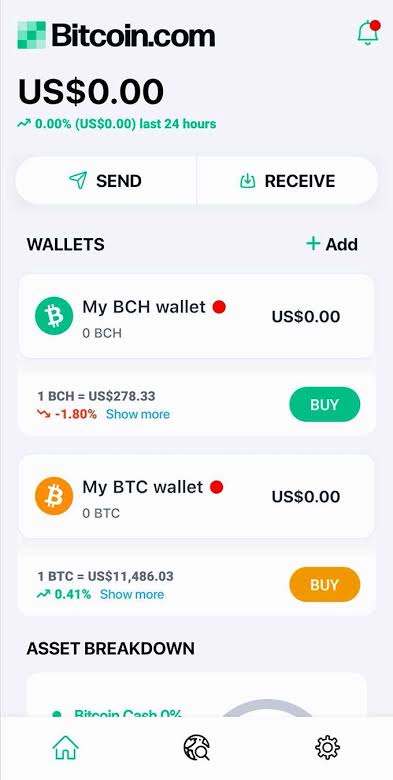
Software wallets. The first wallet program, simply named Bitcoin, and sometimes referred to as the Satoshi client, was released in 2009 by Satoshi Nakamoto as open-source software.[11] In version 0.5 the client moved from the wxWidgets user interface toolkit to Qt, and the whole bundle was referred to as Bitcoin-After the release of version 0.9, the software bundle was renamed Bitcoin Core to distinguish itself from the underlying network.Bitcoin Core is, perhaps, the best known implementation or client. Alternative clients (forks of Bitcoin Core) exist, such as Bitcoin XT, Bitcoin Unlimited,and Parity Bitcoin.
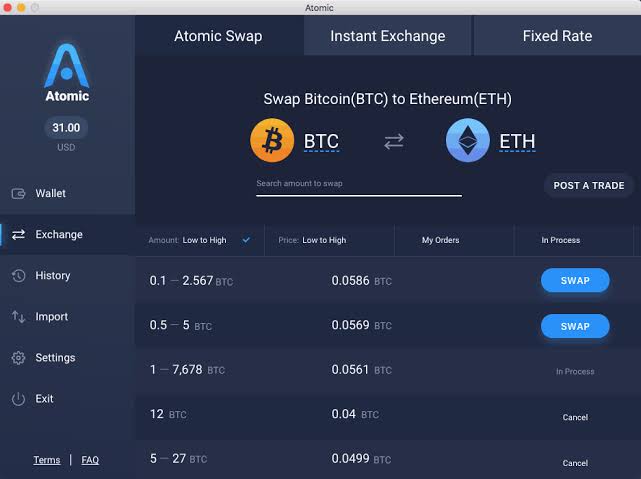
There are several modes which wallets can operate in. They have an inverse relationship with regards to trustlessness and computational requirements. Full clients verify transactions directly by downloading a full copy of the blockchain (over 150 GB as of January 2018).They are the most secure and reliable way of using the network, as trust in external parties is not required. Full clients check the validity of mined blocks, preventing them from transacting on a chain that breaks or alters network rules.Because of its size and complexity, downloading and verifying the entire blockchain is not suitable for all computing devices. Lightweight clients consult full nodes to send and receive transactions without requiring a local copy of the entire blockchain (see simplified payment verification – SPV). This makes lightweight clients much faster to set up and allows them to be used on low-power, low-bandwidth devices such as smartphones. When using a lightweight wallet, however, the user must trust full nodes, as it can report faulty values back to the user. Lightweight clients follow the longest blockchain and do not ensure it is valid, requiring trust in full nodes. Third-party internet services called online wallets or webwallets offer similar functionality but may be easier to use. In this case, credentials to access funds are stored with the online wallet provider rather than on the user's hardware.As a result, the user must have complete trust in the online wallet provider. A malicious provider or a breach in server security may cause entrusted bitcoins to be stolen. An example of such a security breach occurred with Mt. Thanku Read cash❤️
No comments yet