 @ADEPRETTY
more from that month
@ADEPRETTY
more from that month
The Titanic Ship History
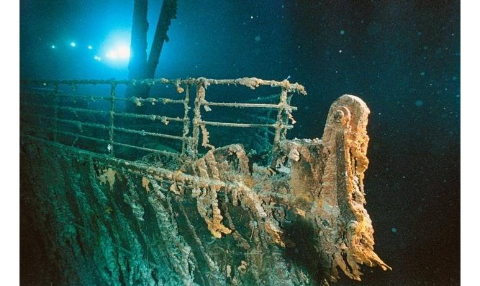
Many historical accounts of the sinking of the RMS *Titanic* describe the 882.5-foot-long passenger ship as “slipping beneath the ocean waves,” as though the vessel and its passengers drifted tranquilly off to sleep, but nothing could be further from the truth. Based on years of careful analysis of the wreck, which employed then state-of-the-art flooding models and simulations used in the modern shipping industry, experts are able to paint a gruesome portrait of *Titanic*’s last hours and minutes.
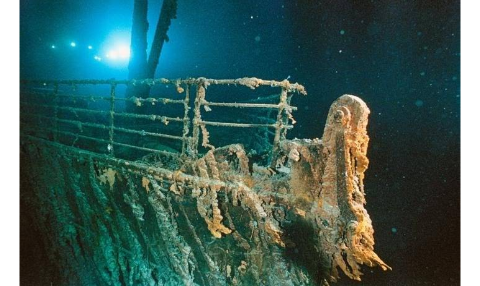
Earlier this month, research on the ship continued as a team of expertscompleted five manned submersible divesat the site over an eight day span. Using high tech equipment, the team captured footage and images of the wreck that can be used to create 3D models for future augmented and virtual reality. The assets will help researchers further study the past and future of the ship. The *Titanic* is in severe decay caused by salt corrosion and metal eating bacteria, Caladan Oceanic, the company overseeing the expedition, said in an announcement about the dives. A manned submersible reached the bottom of the north Atlantic Ocean in August. The *Titanic* dive is being filmed by Atlantic Productions for the documentary special, "Mission Titanic", which will air globally on National Geographic in 2020. “The most shocking area of deterioration was the starboard side of the officers’ quarters, where the captain’s quarters were,” said *Titanic* historian Parks Stephenson. The hull had started to collapse taking staterooms with it. Scientists expect the erosion of the *Titanic* to continue. “The future of the wreck is going to continue to deteriorate over time, it’s a natural process,” said scientist Lori Johnson. unsinkable, sinks into the icy waters of the North Atlantic after hitting an iceberg on its maiden voyage, killing 1,517 people. The United Kingdom’s White Star Line built the *Titanic* to be the most luxurious cruise ship in the world. It was nearly 900 feet long and more than 100 feet high. The *Titanic*could reach speeds of 30 knots and was thought to be the world’s fastest ship. With its individualized watertight compartments, it was seen as virtually unsinkable. On its first voyage, from Southampton, England, to New Yorkwith stops in Cherbourg, France, and Queenstown, Ireland, the *Titanic* was carrying 2,206 people, including a crew of 898. A relatively mild winter had produced a bumper crop of icebergs in the North Atlantic, but the crew, believing their ship was unsinkable, paid scant attention to warnings. https://www.history.com/topics/us-states/new-york On the night of Sunday, April 14, other ships in the area reported icebergs by radio, but their messages were not delivered to the bridge or the captain of the *Titanic*. The iceberg that struck the ship was spotted at 11:40 p.m. Although a dead-on collision was avoided, the *Titanic*‘s starboard side violently scraped the iceberg, ripping open six compartments. The ship’s design could withstand only four compartments flooding. Minutes later, the crew radioed for help, sending out an SOS signal, the first time the new type of help signal was used. Ten minutes after midnight, the order for passengers to head for the lifeboats was given. Unfortunately, there were only lifeboats for about half of the people on board. Additionally, there had been no instruction or drills regarding such a procedure and general panic broke out on deck. The survivors–those who successfully made it onto the lifeboats–were largely women who were traveling first class. In fact, the third-class passengers were not even allowed onto the deck until the first-class female passengers had abandoned the ship. White Star President Bruce Ismay jumped onto the last lifeboat though there were women and children still waiting to board. At 2:20 a.m., the *Titanic* finally sank. Breaking in half, it plunged downward to the sea floor. Captain Edward Smith went down with the ship. The *Carpathia* arrived about an hour later and rescued the 705 people who made it onto the lifeboats. The people who were forced into the cold waters all perished. Official blame for the tragedy was placed on the captain and bridge crew, all of whom had died. In the wake of the accident, significant safety-improvement measures were established, including a requirement that the number of lifeboats on board a ship reflect the entire number of passengers. The sinking of the *Titanic* has become a legendary story about the dangers of hubris. In 1985, after many attempts over many years, divers were finally able to locate the wreckage of the *Titanic* on the floor of the North Atlantic.
2 comments
Cool and very known article!we know little more about it.but from your article my many concept has been clear.Thank you.waiting for your best article.all the best
Thanks.am honored.